
Improving the quality of teaching and learning requires teachers to continually strengthen their professional knowledge and adopt approaches that make classroom learning more engaging and effective for children.
For this reason, education stakeholders have called for sustained professional development, coaching and monitoring to ensure that knowledge acquired by teachers through training is translated into improved classroom practice.
They say continuous support is particularly important in implementing learner-centred approaches which include play-based learning, which forms part of the pedagogical approaches under the country’s Standards-Based Curriculum.
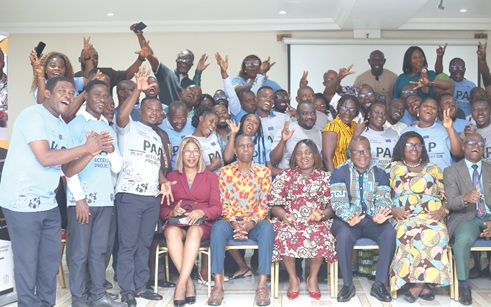
The call was made in Accra last Thursday, at a validation and close-out meeting for a blended play-based learning programme implemented to strengthen teachers’ capacity to use play-based approaches in delivering the curriculum.
The programme, implemented by Right to Play Ghana in partnership with the National Teaching Council (NTC), enrolled 4,455 teachers across 15 districts in the Greater Accra, Volta and Northern regions, with 2,565 teachers successfully completing the course.
Strengthening teacher capacity
The Education Specialist at Right to Play Ghana, Kwabena Gao, said the Play Acceleration Project was developed after gaps were identified in the implementation of play-based learning and the need to bring the approach to life in classrooms.
He said the 18-month project, which ran from January 2025 to June 2026, sought to strengthen teachers’ skills in using play-based learning to deliver the Standards-Based Curriculum and ultimately improve learner outcomes.
Mr Gao said the course was hosted on the NTC’s I-Learn learning management system to provide wider access to teachers.
He said the programme also had an offline component because some teachers worked in communities where Internet access was a challenge.
Teachers could therefore access the course on their mobile phones, study the materials and submit their work when they reached areas with Internet connectivity.
17-unit course
Mr Gao said the course consisted of two modules containing 17 units, with teachers required to complete each unit before proceeding to the next.
He said 2,565 teachers successfully completed the programme and received certificates and Continuous Professional Development (CPD) points through the NTC system.
He said the evaluation showed that teachers who participated in the professional learning community sessions were applying some of the approaches in their classrooms, while those who did not participate had challenges using some of the processes effectively.
The Director for Higher Education at the NTC, Dr Lawrence Sarpong, said teachers who participated in the programme recognised its relevance and its connection to their work.
He said sustainability was one of the issues that needed attention, particularly in ensuring that newly deployed teachers could also access the platform.
Professional development to classroom practice
The Deputy Director, Quality and Access, at the Ghana Education Service (GES), Dr Issahaque Munawaru, said the focus should now be on ensuring that professional development translated into classroom practice.
She identified follow-up support, monitoring and evidence generation as important areas for consideration in determining the future of the blended play-based learning course.
Dr Munawaru said the experiences from the Greater Accra, Volta and Northern regions provided useful perspectives on implementation across different contexts.
She said teachers’ experiences were particularly important because they were closest to the classroom and could provide evidence on what worked, what did not work and what additional support was required.
Dr Munawaru reaffirmed the GES commitment to partnerships that strengthen teacher professionalism and promote innovative approaches to teaching and learning.
She commended Right to Play for its leadership, the NTC for providing the learning management platform, the European Union RTIA Programme for its support, and regional, district and school-level personnel who contributed to the implementation, monitoring and data collection.
She said the true measure of the initiative would be reflected in the extent to which lessons from the programme translated into stronger classroom practice and improved learning experiences for Ghanaian children.
