
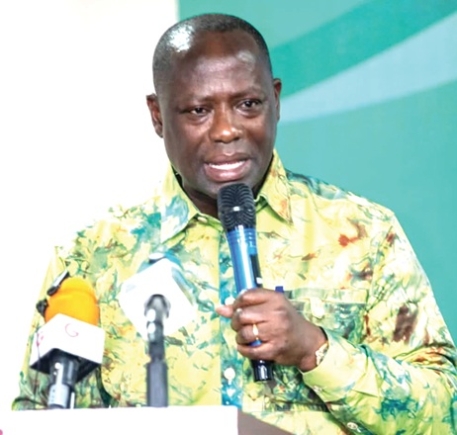
Metropolitan, Municipal and District Chief Executives (MMDCEs) have been directed to identify and submit a comprehensive list of illegal small-scale mining hotspots, threatened water bodies and dangerous abandoned pits within the next 30 days.
The Minister of Lands and Natural Resources, Emmanuel Armah-Kofi Buah, who gave the directive, said the move was to enable the ministry and the Metropolitan, Municipal and District Assemblies (MDAs) to agree on lawful priorities for action.
He was speaking at the national conference for MMDCEs on illegal small-scale mining (galamsey) in Kumasi in the Ashanti Region on Monday, November 2, 2026.
Held on the theme: “Combating illegal mining in Ghana: The role of local government”, the conference was also attended by traditional rulers from across the country.
He called for the strengthening of the district-level anti-illegal mining coordination task force in a bid to decisively deal with the galamsey menace at the local level, saying, “how do we coordinate all relevant institutions and agencies to tackle the illegal mining issue?”
“Let’s coordinate the anti-illegal mining task force in MMDAs together with the National Anti-Illegal Mining Operations Secretariat (NAISMOS), working with the regional ministers as well”, he stated
He further proposed the institution of district action and periodic updates through the appropriate regional coordinating structures, describing risk identified and restoration priorities, adding “this will recognise progress, learn from each and offer the needed support”.
He said mining was the bedrock of the nation’s heritage and an essential pillar of the national economy, but said, “we deceive ourselves if we believe we can mortgage our rivers, poison our lands and sacrifice the health of our people on the altar of a short-term gain”.
“The galamsey crisis before us is not merely an environmental challenge; it is a direct assault on our national security, our public health, food security and our very survival as a people”, Mr Buah stated.
Responsible mining
Touching on the responsible cooperative mining programme, the sector minister said so far, more than 20 had been established nationwide, assuring that the target was to reach 70 by the end of the year.
He said the ministry was working directly with community members in areas identified and suitable for mining, training and giving them the expertise, as well as regulating them to mine responsibly.
Security concern
The Minister of Environment, Science, Technology and Innovation (MESTI), Dr Zanetor Agyeman-Rawlings, said environmental degradation through illegal mining was a national security concern and an existential threat to all.
“When rivers are polluted and our forests are destroyed, rendering farmlands unusable, we are threatening our food security, livelihoods, water security and ultimately the stability of our country”, she stated.
She stated that the fight against galamsey cannot be won through decisions in Accra alone, but it must be fought and sustained at the district level and said, “we must confront the comfortable truth that illegal mining cannot thrive without some level of protection or complicity.
Law
“Whether one is a politician, public official, traditional ruler or a member of the security services, no one should be above the law. We cannot publicly condemn galamsey and privately intervene when those responsible are arrested,” she said.
The Minister of Local Government, Chieftaincy and Religious Affairs, Mahama Ayariga, said that as part of the formulation of guidelines for the 2026 District Assemblies Common Fund (DACF), MMDCEs facing illegal mining would be provided with adequate funds to combat it.
The President of the National House of Chiefs, Ogyeahoho Yaw Gyebi II, who chaired the event, said the destruction of the environment through illegal mining cannot be addressed by government institutions alone and called for collective commitment of traditional authorities, local government leaders, regulatory institutions, security agencies and affected communities.
