
Ghana risks losing the value of its investment in health research if scientific findings continue to end as academic publications without influencing policies and improving healthcare delivery, stakeholders have said.
They called for a fundamental shift in the country’s research approach, urging universities and research institutions to work closely with policymakers and communities to identify research priorities and application findings.
The stakeholders also urged researchers to move away from working in isolation and instead, develop studies around the country’s pressing health challenges, with government institutions and affected communities helping to determine questions that needed answers.
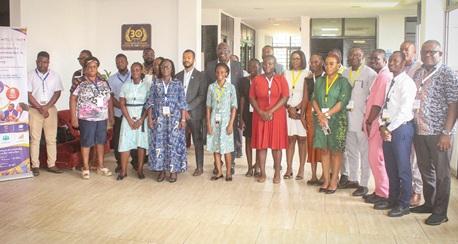
They were speaking at an Evidence Translation and Community and Public Engagement workshop hosted by the African Mental Health Research Initiative (AMARI2) West Africa Hub and the University of Ghana, in Accra yesterday.
The Programme Manager of Africa Mental Health Research Initiative(AMARI), Biggi Dziro, said the workshop was designed to bridge the gap between research and policy by translating findings generated over the past decade into tangible policy outputs.
He said researchers had concentrated largely on publications, doctoral qualifications and postdoctoral programmes without giving adequate attention to the impact of their work on national development.
Mr Dziro said policymakers should communicate their priorities and challenges to researchers to guide studies towards issues requiring urgent attention in the health sector.
The Project Coordinator of the sub-saharan Africa Consortium for Advanced Biostatistics (SSACAB), Caroline Vika, called for the co-creation of research questions, with policymakers and community members participating from the beginning to ensure that studies responded to national and local challenges.
She said strengthening the capacity of biostatisticians and data analysts must go hand in hand with ensuring that research outputs reached those who needed to use them.
Improve health systems
The Dean of the University of Ghana School of Public Health, Professor Kwasi Torpey, urged researchers to align their priorities with health-system and community needs, and also engage stakeholders throughout the research process.
Impactful research
In a speech read on behalf of the Provost of the College of Health Sciences, Professor Alfred Edwin Yawson, an associate Professor, Irene Mawuena Akwo Kretchy, said the University of Ghana’s 2024–2029 strategic plan prioritised impactful research and meaningful partnerships.
She said translating evidence into practice required sustained relationships and institutional arrangements that enabled stakeholders to interpret and apply research findings.
Prof. Yawson cited the Community-based Health Planning and Services (CHPS) initiative as an example of how locally generated evidence, community participation and sustained policy engagement could contribute to healthcare delivery.
The Deputy Director of the West African Centre for Cell Biology of Infectious Pathogens, Professor Peter Kojo Quashie, called for stronger research infrastructure and scientific leadership in Africa.
He said the centre had trained 536 researchers from 22 African countries and produced more than 600 publications since 2015, with research covering malaria, cancer, sickle cell disease and drug resistance.
He also highlighted the centres’ contribution to the country’s COVID-19 response through the sequencing of nearly 3,000 SARS-CoV-2 genomes, with findings shared with national response committees.
For his part, a public health practitioner, Dr Sampson Kafui Djonor, urged researchers to involve the Ministry of Health and its agencies from the design of studies through to dissemination of findings.
