
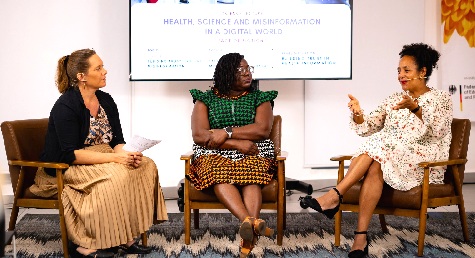
Experts from Ghana and Germany have called for stronger science journalism and clear, accessible communication of scientific evidence to counter the growing spread of misinformation in the digital world.
They explained that the increasing influence of social media algorithms, which often promote sensational and emotional content, poses a threat to public trust in science and, particularly, in evidence-based medicine.
The experts made the call at a science lecture organised by the DAAD Regional Office in Accra on October 15, 2026.
The lecture was on the theme, “Fact or Fiction?
Health, Science and Misinformation in a Digital World”.
It brought together experts to discuss the challenges posed by disinformation and explore ways to strengthen public understanding of science and health-related issues.
Lecture
The lecture was also aimed at identifying the role of international cooperation in addressing health misinformation and strengthening scientific capacity.
At the lecture, a panel debate was organised on the respective responsibilities of governments, physicians and society in tackling falsehoods circulating through digital platforms.
Participants agreed that sustained cooperation between countries was necessary to address emerging health threats and ensure that reliable scientific evidence informed public understanding and policy decisions.
They mentioned an ongoing German-Ghanaian collaboration in virus research and pandemic prevention as one of the examples of partnerships that could contribute to improved public health preparedness.
They also stated that addressing misinformation required a combination of global partnerships, stronger independent science journalism and sustained engagement with local communities.
Science journalism
A professor at the University Medical Centre Hamburg-Eppendorf, Germany, Prof. Marylyn Addo, spoke about the dangers of algorithm-driven misinformation, particularly the way digital platforms amplify content designed to provoke anger and attract attention.
She called for stronger independent science journalism to help the public differentiate credible scientific evidence from false or misleading information.
She said it was critical for journalists and researchers to work together to communicate scientific findings in clear, accessible language to ensure that complex information was understood by different audiences.
She added that effective science communication was also essential to rebuilding public confidence in scientific institutions and helping people make informed decisions about their health.
Local engagement
A professor at the University of Ghana, Prof. Lydia Mosi, who brought a Ghanaian perspective to the discussion, stressed the importance of community-based research and collaboration with local actors in promoting trust in scientific evidence.
She stressed the need to engage communities in research processes by working with local stakeholders, including traditional healers, stating that this could help bridge the gap between scientific knowledge and community practices.
She indicated that such collaboration could improve public acceptance of evidence-based medicine and also ensure that health communication was responsive to local contexts and concerns.
