
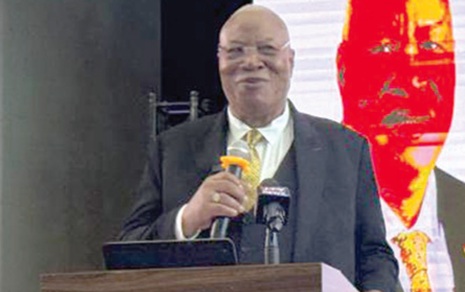
The Board Chairman of GCB Bank, Professor Joshua Alabi, has called for robust corporate governance in state-owned enterprises (SOEs) to make them efficient and commercially viable.
He said SOEs must not become liabilities, but an integral part of the socio-economic development of the country.
“Our state-owned enterprises must become commercially viable, efficiently managed and financially sustainable. They must generate profits, pay taxes, employ our people and provide dividends to government to support national development,” he said.
Speaking at the 47th Graduation and Admission Ceremony of the Institute of Chartered Accountants, Ghana (ICAG) in Accra last Saturday, Prof. Alabi said SOEs and public institutions required competent boards of directors and management with the requisite capacity and professional integrity for effective leadership.
“All that we do in this country is lobby to be minister and district chief executives, and these are the policy people who direct us but the real engines are the boards.
They have to work with management of various organisations, but sometimes we just push people there to compensate them and that is where the problem is,” the former Vice-Chancellor of the University of Professional Studies, Accra (UPSA), said.
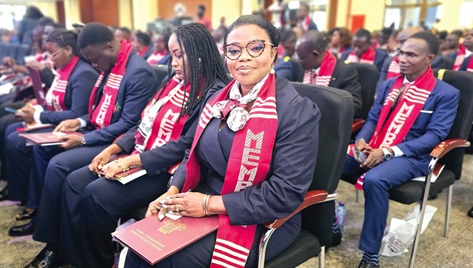
The ceremony saw the graduation and admission of 1,234 accountants, with 802 admitted as full chartered accountants, 218 as associate members who will become chartered accountants after the requisite work experience.
Also, 304 graduated in specialised accountancy professional development programmes such as fraud analytics, enterprise risk management and advanced business analytics.
Challenges
Prof. Alabi said the challenges confronting the country stemmed from a lack of discipline, transparency and accountability.
He, therefore, challenged professionals, including accountants, to be at the forefront in dealing with such issues.
“I am not suggesting that professionals are responsible for every failure in society.
However, professionals occupy strategic positions where they can either prevent institutional failure or facilitate it.”
“Sometimes, professional silence can be as damaging as professional misconduct,” he added.
Integrity
Prof. Alabi urged accountants to be principled and professional in their endeavours and not succumb to pressures or engage in unethical conduct.
He said there would be many occasions whereby powerful people, including bosses, shareholders and political figures would direct accountants to do things that would make them uncomfortable.
“When these moments come, remember your qualification gives you knowledge, your position gives you authority but your integrity gives you credibility,” he said.
For his part, the President of ICAG, Augustine Addo, said ICAG, as the regulator of accountancy, would not compromise on integrity and standards.
“Members who breach professional standards will be subject to the appropriate disciplinary processes, in accordance with the law and the institute’s regulations,” he said.
