
The Netherlands Development Organisation (SNV) has called for increased private sector investment and stronger community participation to sustain gains made in water, sanitation and hygiene (WASH) services in the Upper West Region.
It said sustainable sanitation required a collective effort involving the government, traditional authorities, communities, the private sector and development partners to ensure that every household had access to safe and decent toilet facilities.
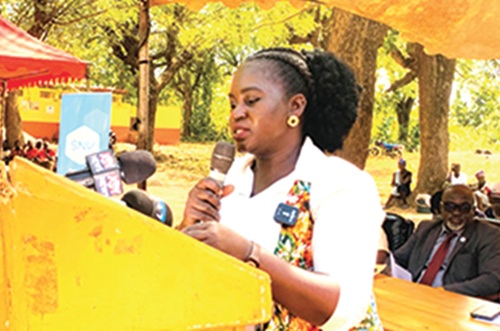
The Project Manager of SNV, Theresa Swanzy Baffoe, made the call at an event to mark World Toilet Day at Brutu Basic School in Nandom. The event was held on the theme: “Safe toilets, equal Futures”.
She said access to safe sanitation went beyond the provision of household toilet facilities, describing it as a matter of dignity, privacy, health, safety, opportunity and equality.
Mrs Baffoe explained that decent sanitation protected children from diseases, enabled girls to attend school with confidence and provided women with greater privacy and security.
She said the Healthy Future All project, implemented in collaboration with the Nandom Municipal Assembly and Lambussie District Assembly, had contributed significantly to improving WASH services in communities, schools and health facilities.
She said a survey conducted by the project showed that open defecation in Nandom had reduced from 37 per cent to less than seven per cent.
She said the project had supported the provision of 74 boreholes with hand pumps, rehabilitated 80 broken-down water facilities and installed 24 solar-powered limited mechanised water systems in schools and health facilities.
It had also provided 32 gender-friendly sanitation facilities and more than 500 handwashing facilities, while strengthening over 75 water and sanitation management teams.
Sustainability
Mrs Baffoe said local artisans and area mechanics had also been trained to maintain the facilities and ensure their sustainability beyond the project's implementation period.
She said the greatest achievement was not merely the infrastructure provided but the growing capacity of communities to manage and maintain the facilities.
She, therefore, called for greater private sector involvement in sanitation, noting that local artisans, mechanics and entrepreneurs had important roles to play in providing affordable products and services.
She encouraged women-led businesses producing reusable sanitary pads, soap and detergents to explore opportunities in the WASH sector. She also urged the media to publicise local sanitation businesses to enable communities to access their services.
The Upper West Regional Director of the Environmental Health and Sanitation Department, Freda Naatu, said inadequate access to safe sanitation remained a major public health challenge in the region, particularly for women and children.
She said the Community-Led Total Sanitation (CLTS) approach remained an important strategy for transforming sanitation practices in rural communities.
Mrs Naatu said the region had made considerable progress in the campaign against open defecation and urged communities to sustain the gains through improved sanitation practices and ownership.
Environmental cleanliness
Naa Biliguo S. Enock, who read a speech on behalf of the Nandom Municipal Coordinating Director, said safe sanitation was essential to protecting public health, preserving human dignity and promoting development.
He urged households to construct, maintain and consistently use toilet facilities while discouraging open defecation and promoting proper handwashing and environmental cleanliness.
He also called for stronger behavioural change communication and community education to address poor sanitation practices.
The Divisional Chief of Ko, Naa Thomas Gyereh Domepeah, commended SNV and the two assemblies for their support towards improving sanitation in the area.
He said Nandom had attained Open Defecation Free (ODF) status through collective efforts and urged communities to sustain the achievement even after development partners had ended their support.
He appealed to traditional authorities, local authorities and community members to continue working together to prevent a reversal of the progress made.
