
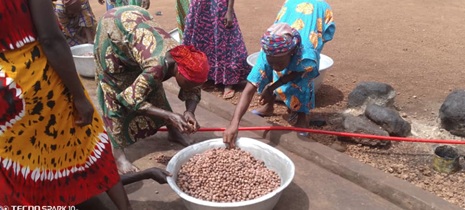
Every bag of shea nuts processed into butter means food on the table, school fees paid and household needs met for many women in Sorugu, a farming community in the Sagnarigu Municipality in the Northern Region.
The women collect, buy and process the nuts into butter to earn income for the upkeep of their families.
However, the livelihood of these women is under threat as they struggle with inadequate processing machinery, limited access to finance and markets, and growing competition for shea nuts from traders buying the raw material for export.
Sorugu, with about 500 houses, is home to two shea processing factories where women turn the nuts into butter for sale to traders, consumers and other buyers.
During the rainy season, the women collect shea nuts from farms belonging to their husbands. In the dry season, when nuts become scarce, they travel to markets in Tamale, Kumbungu, Savelugu and Tolon to buy them.
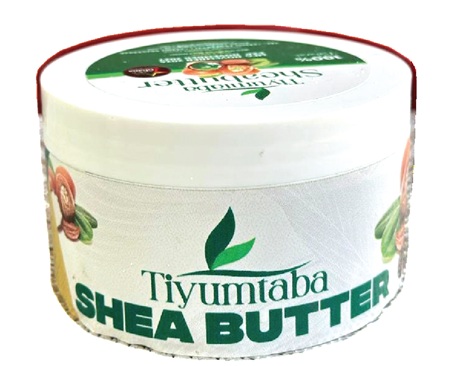
Shea butter made at the factory
In some cases, factory owners also provide the raw materials to women processors to keep production going.
While most of the processing is done at the factories, some women also process the nuts at home because they do not have adequate access to machines.
Source of income
For Tohaltu Abubakari, shea collection, processing and trading have become an important source of income for her household.
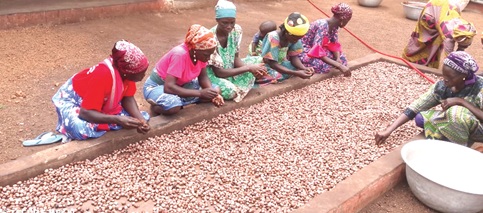
Some women working at the Tiyumtaba Shea Processing Factory
“The income I generated from the shea activity again gives me greater financial independence and a stronger voice in household decision-making,” she said.
Another processor, Salima Mahama, said the shea industry had also employed women and young people in the community.
She said after completing senior high school, she had remained at home without a job until she secured employment at a shea processing facility, where she now works in packaging and supervision.
“After my senior high school (SHS), I was sitting idle, not knowing my whereabouts, but the shea processing facility has engaged me, and I'm earning some income,” she explained.
She added that women were involved in different stages of the value chain, including gathering the nuts, processing, packaging and marketing shea butter and other products.
Despite the income and employment the industry provides, the processors lamented that several challenges were making it difficult to sustain and expand their businesses.
The Executive Director of the Tiyumtaba Shea Processing Factory, Mary Alhassan, said the lack of modern equipment meant that workers had to spend long hours processing the nuts, affecting productivity and the quality of the final products.
Ms Alhassan said accessing grants and affordable credit to expand the business was also a challenge, adding, “High interest rates on loans make it risky for us, small-scale producers, to borrow money to purchase equipment, increase production or employ additional workers”.
Competition for nuts
Ms Alhassan indicated that another major concern was the growing competition for shea nuts from traders, particularly men engaged in the export business.
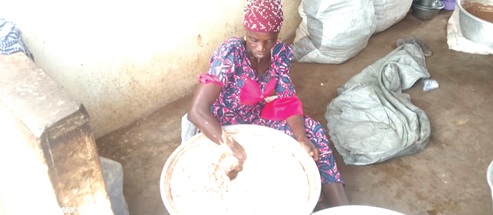
Nayila Mohammed processing shea into shea butter
She said the traders often offered higher prices for the nuts, making it difficult for local processors to secure enough raw materials for their factories.
According to her, the growing demand for raw shea nuts for export could affect local value addition if large quantities of the raw material left the country before being processed into butter and other finished products.
She, therefore, appealed to the government and financial institutions to support local shea processors in the region with financing and equipment to increase production and create more jobs for women and the teeming youth.
