

A Stakeholder meeting to solicit practical and evidence-based inputs on Ghana’s 2020 National Security Strategy has been held at Koforidua, the Eastern Regional capital.
The meeting which was organised by the National Security Council Secretariat (NSCS) forms part of the review process of emerging security threats.
The meeting brought together representatives from the various security agencies in the region, heads of departments and agencies, Municipal and District Chief Executives (MDCEs), officials from the National Security Secretariat, Regional House of Chiefs, GPRTU, Civil Society Organisations (CSOs), religious leaders, traditional leaders and students from second cycle educational institutions.
They brainstormed on security issues and identified key challenges peculiar to the region to inform the development of a responsive and comprehensive national security strategy.
Security environment
The Technical and Intelligence Aide to the National Security Coordinator of the NSCS, Dr Bako Mohammed, indicated that the security environment had evolved considerably since the adoption of the 2020 National Security Strategy.
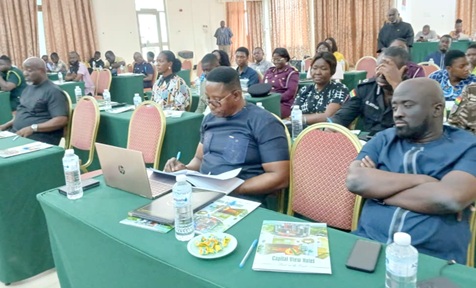
Participants in Koforidua
However, he said it had become necessary to re-assess existing threats and responses.
According to Dr Mohammed, the review was not merely a routine exercise but a proactive effort to ensure that Ghana's national security architecture remained responsive to changing local, regional and global security dynamics.
Dr Mohammed further stressed that maintaining peace and stability was critical to national development, stressing that insecurity had the tendency to disrupt education, economic activities, social cohesion and general well-being of communities.
Emerging threats
He also mentioned violent extremism and terrorism, transnational organised crime, trafficking in illicit arms, narcotics and persons, communal and chieftaincy disputes, cybercrime, illegal mining (galamsey), misinformation, disinformation and climate- related security challenges as some emerging threats which required attention.
Dr Mohammed urged stakeholders to identify security threats that might not emanate from the national level and provide credible information to guide policymakers.
Dr Mohammed encouraged participants to pay attention to early warning and preventive mechanisms, stressing that timely identification and reporting of potential threats could help prevent local disputes and other security concerns from escalating into major crises.
Build trust
Effective partnerships between communities and security agencies, he indicated, were also necessary to build trust and facilitate timely sharing of information on suspicious activities and emerging threats.
The inputs gathered from the regional consultation, Dr Mohammed explained, would be recorded, documented and submitted to the committee responsible for reviewing the National Security Strategy for consideration.
He clarified that views expressed during the consultation would not automatically constitute government policy, saying that the final strategy would be subjected to the appropriate governmental processes before its adoption.
"Tell us exactly what you know, tell us what you observe and tell us what you really believe must be addressed", Dr Mohammed stated.
He was therefore confident that the collective contributions of stakeholders in the region would help produce a national security strategy capable of responding effectively to both existing and emerging threats.
"We are confronted with emerging concerns such as cybercrime threats, illegal mining (galamsey), influx of nationals from the West African sub-region, farmer-header skirmishes, chieftaincy disputes and violent extremism, among others", Dr Mohammed stated.
Dr Mohammed stated that Ghana had successfully managed difficult security challenges in the past through sustained collaboration among state institutions and communities, and that they would continue to protect its peace, stability and democratic gains.
Shared responsibility
The Eastern Regional Minister, Rita Akosua Adjei Awatey, who is also the Chairperson of the Regional Security Council (REGSEC), said security was a shared responsibility for all and sundry, saying the world was changing rapidly resulting in security challenges becoming increasingly complex.
Such threats, Mrs Awatey indicated, had the potential to undermine peace, stability and national development, and urged all to support efforts at protecting the nation’s peace.
Writer's email
