
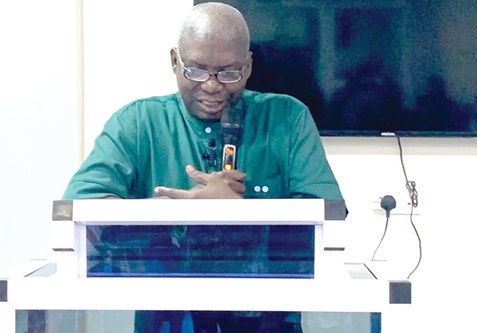
The Upper West Regional Director of Agriculture, Huudu Abu, has appealed for urgent logistical support for seed inspectors in the region to enable them to inspect and certify seed production fields effectively.
He said the lack of reliable transport was hampering inspection activities and could undermine efforts to ensure that farmers have access to quality certified seeds.
Mr Abu made the appeal at a stakeholder engagement organised by the National Seed Council (NSC) in Wa as part of nationwide consultations with stakeholders in Ghana's seed industry.
According to him, seed inspectors are required to visit production fields at least two to three times during the growing season to monitor production and ensure that seeds meet approved standards before certification.
"It is sad to say that my regional seed inspection team does not have reliable and strong means of transport to perform their duty diligently," he said.
Mr Abu noted that providing the needed logistics would strengthen seed inspection and certification and improve the quality of seeds produced in the country.
He also described the engagement as an important platform for seed producers, dealers, inspectors, researchers and other stakeholders to share experiences, identify challenges and propose solutions to strengthen the seed sector.
The Director of the Plant Protection and Regulatory Services Directorate (PPRSD) of the Ministry of Food and Agriculture and Member-Secretary of the NSC, Eric Bentsil-Quaye, said the consultations aimed to obtain firsthand information on the state of the seed industry.
He explained that the Plants and Fertiliser Act, 2010 (Act 803) established the National Seed Council and mandates it to formulate policies for seed development, production, inspection, marketing and certification, while ensuring national seed security.
Mr Bentsil-Quaye said the council was engaging stakeholders nationwide to identify challenges and opportunities along the seed value chain. He emphasised the need to improve seed traceability and authentication to help farmers identify seed sources and address the challenge of poor-quality planting materials.
"Digitisation has opened up great opportunities for improving the tracking and authentication of seeds, but more investment is also needed in modern seed processing and storage facilities," he said.
He further called for greater access to affordable financing for private seed enterprises and accelerated development of climate-smart crop varieties.
He disclosed that, with support from the Japan International Cooperation Agency (JICA), three seed facilities would be upgraded with modern seed-conditioning equipment and are expected to become operational from 2027.
The Agronomist of the Savanna Agricultural Value Chain Development Project (SAVEP), Christopher Yirkaare Akai, said the project had supported farmers with land development, extension services, training and inputs, particularly for maize, soybean and rice production.
He added that SAVEP had also supported the development of a soybean variety suitable for mechanised harvesting and currently under consideration for national release.
Participants agreed that strengthening Ghana's seed sector requires collaboration among government, regulators, research institutions, private seed companies, agro-dealers, farmers and development partners.
Mr Abu expressed hope that recommendations from the engagement would help improve seed production, certification, distribution and access to improved seed varieties.
"Access to quality seed is central to boosting agricultural productivity, enhancing food security, increasing farmers' incomes and creating a resilient agricultural sector," he said.
