

Presssure to reduce construction costs must never come at the expense of human lives, the Minister of Works, Housing and Water Resources, Ahmed Ibrahim, has said.
He said interference by project owners in technical decisions, weak regulatory enforcement and disregard for engineering specifications could result in structural failures, loss of lives and destruction of public infrastructure.
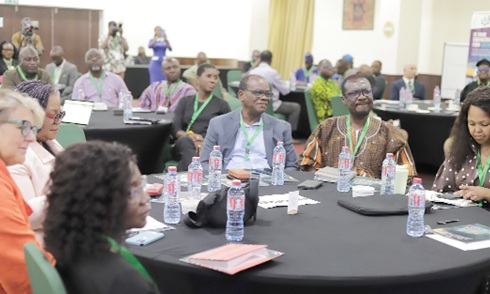
The minister was speaking at a three-day roundtable discussion on advancing safety in construction in Accra yesterday.
It was organised in collaboration with the Engineering Council, the Royal Academy of Engineering and Lloyd’s Register Foundation, on the theme: “Advancing safety in construction through the global engineering capability review 2026.”
The engagement seeks to examine the country’s engineering capabilities, regulatory frameworks, professional standards and institutional capacity, while identifying gaps and developing practical recommendations to improve construction safety.
Professionalism
Mr Ibrahim challenged engineers to uphold professional ethics and resist pressure from project owners to approve substandard work, stressing that every structure designed, approved and constructed carried a direct responsibility for protecting human lives.
The minister said the government would work with the Engineering Council and other stakeholders to address gaps in professional capacity, regulation and enforcement to ensure that construction projects met the required safety standards.
He cited an experience involving an engineer who resisted pressure from a project owner to reduce the quantity of cement specified for a building, insisting that his professional training and ethics would not allow him to compromise the structural integrity of the project.
He said such situations highlighted the pressure some professionals faced from clients seeking to reduce construction costs at the expense of quality.
Engineering gaps
The Registrar of the Engineering Council, Isaac Bedu, said the roundtable was intended to bring together stakeholders across the built environment to examine weaknesses in the country’s construction safety systems and agree on practical interventions.
He identified flooding, collapse of buildings and road failures as some of the challenges requiring coordinated action.
Mr Bedu said participants would examine the findings of a Global Engineering Capability Review against Ghana’s experiences and develop an action plan that reflected the realities of the country’s construction sector.
Partnership
The Head of Sustainable Development at the Royal Academy of Engineering, Clare Merbely, said engineering had a critical role in addressing challenges such as climate change, economic development and the transition to sustainable energy.
She said the academy was working with partners across Africa to strengthen engineering education, professional capacity and collaboration between policymakers, industry and technical institutions.
Ms Merbely said the review was designed to stimulate discussions and help stakeholders identify practical ways of improving engineering standards and construction safety.
