
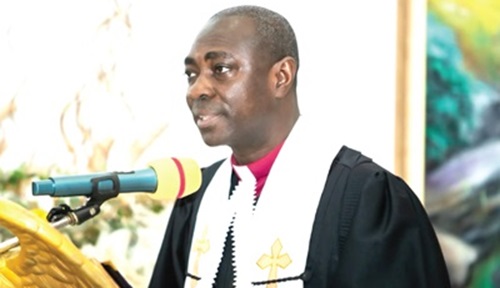
The General Assembly of the Presbyterian Church of Ghana (PCG) has approved a revision of its Constitution to allow its members or Christians to serve as functionaries in traditional settings such as palaces, stools or skins.
The approval is for a revision of Paragraph 18(e) of the Third Schedule of the PCG Constitution, which now states that Christians may serve in purely civil roles in the palace or for a stool or skin.
However, members entering such traditional roles must publicly denounce and renounce any rituals, pouring of libations, or practices connected to ancestral worship that conflict with Christianity
In such situations, the church will accompany such individuals before, during and after installation, with detailed procedures to be outlined in the church’s Manual of Order.
The decision formed part of a broader set of reforms adopted by the General Assembly to strengthen the PCG’s governance and administrative clarity, and it was the most consequential decision that emerged from the 26th General Assembly of the Church held at the Ramseyer Training Centre, Abetifi–Kwahu from August 12 to August 16.
Consequently, the General Assembly Council (GAC) has been tasked to align all related constitutional provisions and develop official guidelines to support the amendment.
Policy shift
The decision from the General Assembly reaffirms the church’s easing stance on church and traditional culture, shifting from converts being required to completely distance themselves from stool, skin and palace offices due to perceived ties to idolatry and libation-pouring to now establishing formal channels like "Palace Committees" to bridge the gap between Christian faith and traditional authority.
The General Assembly also approved a restructuring of Article 25(6) of its Constitution, which regulates meetings of the GAC. Under the new arrangement, the GAC will meet not less than three times a year, specifically in March, April, June, July and November, with an expanded agenda covering statistics, accounts, percentage contributions, presbytery performance, remissions, directors’ reports, internal audit reports, preparations for General Assembly, location of agents, general review, programmes for the ensuing year and general administration.
The General Assembly also accepted the church’s Occupational Health, Security and Safety Policy, reinforcing PCG’s commitment to safe working environments across all institutions.
In response to emerging digital trends, delegates approved an expansion of the Church’s ICT Policy to include guidelines on artificial intelligence and digital transformation.
To strengthen doctrinal oversight, the General Assembly further directed that all congregations and preaching points must seek clearance from the next higher court before inviting non-Presbyterians to speak at renewal services.
All decisions of the GAC contained in the Clerk’s report were ratified, affirming the Council’s work over the past year.
The General Assembly also accepted the audited financial statement for 2025, confirming the church’s financial accountability.
