
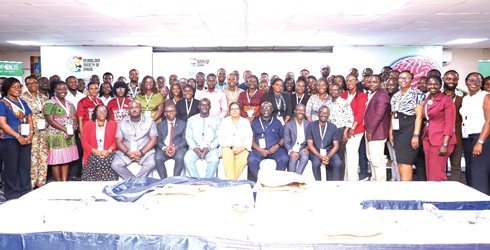
The President of the Neurology Society of Ghana (NSG), Professor Albert Akpalu, has called for increased training of neurologists and other health professionals to improve access to care for people living with neurological conditions.
He said the country currently had about 20 neurologists, up from only one in 2004, but the number remained inadequate considering the increasing burden of neurological diseases.
Prof. Akpalu made the call in Accra yesterday at the maiden annual and scientific conference of the Neurology Society of Ghana.
The conference, held in Accra yesterday, brought together neurologists, physicians, researchers and other healthcare professionals.
Representatives of sister medical organisations, including the Rheumatology Association of Ghana, the Ghanaian Society of Cardiology, the Diabetes, Endocrine & Metabolic Society of Ghana (DEMSoG), the Ghana Thoracic Society, the Ghana Kidney Association and the Ghana Association for the Study of Liver and Digestive Diseases (GASLIDD).
Few numbers
“Neurology is one of the sub-specialties we have which has a few numbers. The difficulty in training or the long period in training has limited the number of neurologists that we have,” he said.
He said the growing incidence of stroke, epilepsy, Parkinson’s disease and other neurological conditions made it necessary to strengthen training and access to specialised care.
“One in four adults watching me now will have a stroke in their lifetime,” Prof. Akpalu said, adding that awareness creation was critical to reducing the impact of neurological diseases.
He said neurologists worked with other health professionals, including nurses, physiotherapists, speech and language therapists, occupational therapists and dietitians, to provide comprehensive care.
Prof. Akpalu said the country currently had multidisciplinary stroke units at the Tamale Teaching Hospital, Komfo Anokye Teaching Hospital, Cape Coast Teaching Hospital and Korle Bu Teaching Hospital, but more were needed.
“We need to open up a few more,” he said, while calling for greater public education on the signs of stroke and appropriate first aid for people experiencing seizures.
The Deputy Director of Clinical Services Development at the Institutional Care Division of the Ghana Health Service (GHS), Dr Ebenezer Oduro-Mensah, said the country currently did not have a specific policy on neurological conditions.
Representing the Director-General of the GHS, Dr Samuel Kaba Akoriyea, who is also a Consultant Neurosurgeon, Dr Oduro-Mensah, said the activities of the NSG could provide a foundation for developing policies on stroke, epilepsy and other neurological conditions.
“We currently do not have a specific policy for neurological cases,” Dr Oduro-Mensah said.
He said stroke was a major non-communicable disease burden in the country, with increasing numbers of people within the working-age group, particularly those in their 40s and 50s, being affected.
“That is a huge burden, economic burden on the country.
Families suffer being able to stay out of work, out of school,” he said.
Dr Oduro-Mensah said the GHS, through the Ministry of Health, was rolling out telemedicine services to improve access to specialists, particularly in areas where neurologists were scarce.
Collaboration
The President of the Rheumatology Association of Ghana, Prof. Ida Dzifa Dey, congratulated the NSG on its maiden annual and scientific meeting, and called for stronger collaboration among medical specialties.
She said neurological and rheumatological conditions often intersected, making multidisciplinary collaboration important in improving patient outcomes.
