
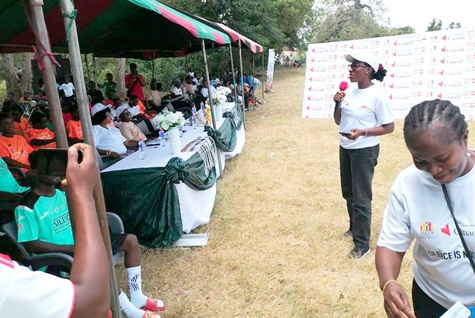
The National Commission for Civic Education (NCCE) has urged men and boys to promote gender equality, protect adolescent health and help end gender-based violence (GBV).
The Director of Communications and Corporate Affairs at the NCCE Head Office, Rita Ofosua Amparbin, made the call at a community football event organised by the NCCE Central Tongu Directorate in partnership with the United Nations Population Fund (UNFPA), with support from Global Affairs Canada.
She said football could foster unity and inspire positive social change, adding that teamwork, mutual respect and shared responsibility were essential to building inclusive communities.
Promote positive masculinity
Ms Amparbin urged men and boys to reject harmful notions of masculinity associated with dominance and control, and embrace respect, protection and shared responsibility.
“True strength is not about physical dominance or power over others. True strength, positive masculinity, is about protection, respect, shared responsibility and upliftment,” she said.
She stressed that adolescent girls deserved to grow up free from violence and abuse, with access to accurate health information and opportunities to make informed decisions about their sexual and reproductive health.
She also urged parents to raise boys who respected women and girls, while calling on community leaders to protect vulnerable people and promote justice. She said equal opportunities for girls in education, leadership and personal development benefitted families, communities and the nation.
Protect adolescents
The Deputy Volta Regional Director of the NCCE, Oral Robert, said the initiative sought to deepen public awareness of adolescent health, gender equality and GBV prevention.
He said protecting adolescents was a collective responsibility involving parents, caregivers, traditional authorities, institutions, community leaders and young people.
The Founder and Chief Executive Officer of Mama Lynn Charity Foundation, Evelyn Agbese, educated participants on physical, emotional, psychological, sexual and economic violence.
She cited insults, humiliation, deliberate isolation, unwanted touching, withholding money and refusal to pay for work done as forms of abuse.
Dr Collins Eli Asilevi, who facilitated a session on adolescent reproductive health, explained the physical, emotional and social changes associated with adolescence and encouraged participants to seek guidance from trusted adults.
He said the interaction revealed gaps in participants’ understanding of the legal age of sexual consent, with some believing sexual activity was lawful at any age if both parties consented.
Sustain community action
The Central Tongu District Director of the NCCE, George A. K. Amey, commended participants for their involvement and urged them to share the lessons in their homes, schools, peer groups and communities.
The engagement formed part of efforts to integrate civic education with youth-centred activities to promote informed decision-making, human dignity, gender equality and safer environments for adolescents.
Beyond the football competition, it provided a platform for community engagement on positive masculinity and peaceful coexistence.
