
MTN Ghana has committed to investing US$1 billion in digital infrastructure, describing the investment as a vote of confidence in the country’s economy and a major step towards accelerating the country’s digital transformation.
The Chief Home Officer of MTN Ghana, Richard Acheampong, said the investment would strengthen fibre broadband infrastructure and expand reliable home internet connectivity to support education, business, remote work and entertainment.
He said the initiative formed part of MTN’s Mission 2030 Strategy, which placed home connectivity at the centre of the company’s long-term growth agenda and its contribution to Ghana’s digital economy.
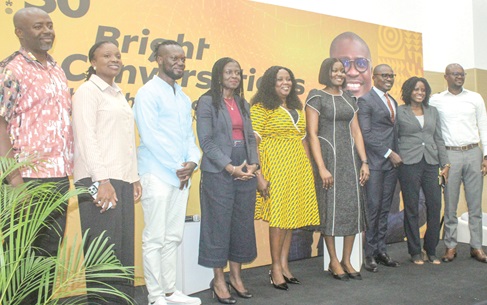
Speaking at the Bright Conversations with Richard Acheampong in Accra yesterday, Mr Acheampong said the home had become the hub of many aspects of daily life, making dependable internet connectivity an essential service.
He appealed to the media and other stakeholders to support public education on the value of fixed broadband, saying greater awareness would accelerate digital inclusion and ensure more households benefited from reliable internet services.
Confidence
Mr Acheampong said the planned US$1 billion investment reflected MTN’s belief in the country’s economic prospects and the country’s digital future.
He explained that the investment would finance fibre networks, digital systems and support technologies needed to provide reliable, high-capacity internet services for homes and businesses.
He said the objective was to ensure customers could participate in virtual meetings, access online education, stream digital content and run businesses without service interruptions.
Changing lifestyles
Mr Acheampong said the COVID-19 pandemic transformed the role of the home, with education, work, health care and entertainment increasingly taking place remotely.
He said the shift had created greater demand for reliable broadband infrastructure capable of supporting multiple users and connected devices simultaneously.
“The home is no longer just a place where people return to rest. It has become a centre for work, learning, business and entertainment, and it requires dependable internet connectivity,” he said.
Beyond speed
The Chief Home Officer said customers were primarily interested in internet services that worked consistently rather than headline speed figures.
He explained that MTN’s fibre network currently offers speeds of up to 500 megabits per second, but the emphasis remained on delivering stable and reliable connectivity.
He likened internet infrastructure to water distribution systems, saying consumers expected water to flow whenever they opened a tap without considering the network behind it.
Bridging digital divide
Mr Acheampong challenged the perception that fibre broadband was reserved for high-income households.
He said home internet created opportunities for children to access educational resources, enabled entrepreneurs to operate businesses online and allowed families to connect multiple devices at the same time.
He added that expanding fibre access would help narrow the digital divide by giving more Ghanaians equal opportunities to participate in the digital economy.
Mr Acheampong expressed concern over frequent fibre cable cuts, particularly during road construction activities, saying the disruptions affected internet services across communities.
He said MTN was collaborating with government agencies, contractors and other stakeholders to improve the protection of fibre infrastructure and strengthen network resilience.
He also advocated the classification of telecommunications infrastructure as critical national infrastructure because of its growing importance to economic activity and public services.
Mr Acheampong urged the media to partner MTN in educating the public on the importance of fixed broadband and its role in national development.
He said building a strong digital economy required collaboration with government, industry and the media to ensure every Ghanaian household had access to reliable internet connectivity.
