
The growing practice of Members of Parliament (MPs) providing personal financial support to constituents could make political participation increasingly difficult for women, young people and persons with disabilities, the Gender Centre for Empowering Development (GenCED) has cautioned.
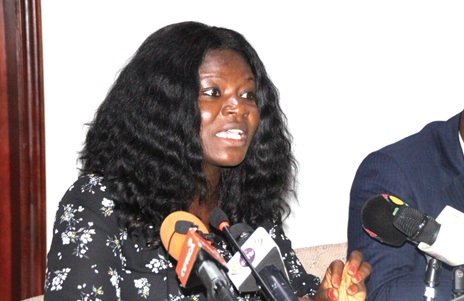
The Executive Director of GenCED, Esther Tawiah, said while the support being offered by MPs to newly admitted senior high school (SHS) students was helping families cope with the cost of preparing their children for school, it also raised broader questions about the financial expectations attached to political office.
She said this in an interview with the Daily Graphic.
Growing pressure
Ms Tawiah cited the distribution of mattresses, trunks, chop boxes, books, provisions, sanitary products, bicycles and cash by MPs to newly admitted SHS students in various constituencies.
In North Tongu, for example, the MP has reportedly distributed mattresses, chop boxes and exercise books to 2,269 students, as well as bicycles to newly enrolled day students.
In South Tongu, the MP has also started distributing mattresses and chop boxes to 600 students.
Ms Tawiah said such interventions, although beneficial, could create an expectation that MPs should personally finance constituents’ needs.
She said social media had amplified the pressure, as residents compared what their MPs were providing with interventions in other constituencies.
She added that such situations could create an “arms race of expectations”, in which the ability of an MP to spend personal resources would become an informal measure of political performance.
Impact on women
Ms Tawiah said the trend could have implications for political inclusion, particularly for women, young people and persons with disabilities.
She noted that women currently constituted 41 of Ghana’s 276 MPs, representing 14.9 per cent, while the Affirmative Action (Gender Equity) Act, 2024, targets at least 30 per cent women’s representation in decision-making by 2026.
She said candidates without substantial personal wealth could face greater difficulty meeting expectations around constituency support.
“Young leaders, women and persons with disabilities may not have the accumulated wealth, business networks or patronage relationships that can support such expectations,” she said.
Call for clarity
Ms Tawiah called for greater transparency about MPs’ remuneration, resources available for constituency work and the distinction between personal philanthropy and public expenditure.
She said the debate on the monetisation of politics should go beyond campaign and election spending to examine the financial expectations placed on politicians after they assumed office.
She said citizens should not be left in a situation where access to an MP’s personal resources became a substitute for effective public systems.
“The deeper question is whether democracy should require a politician to pay personally in order to prove that they deserve to represent the people,” she said.
