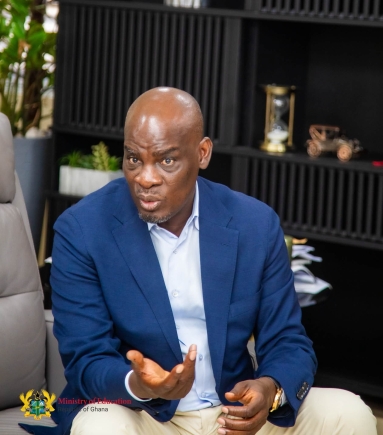
The Minister of Education, Haruna Iddrisu, has directed the Ghana Tertiary Education Commission (GTEC) to collaborate with the Rent Control Commission to explore ways to regulate hostel fees and ensure that students are not disadvantaged by escalating rental charges.
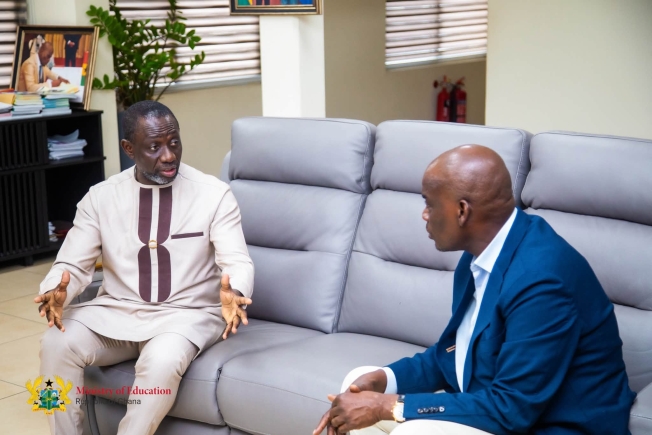
The directive followed the minister’s engagement with the acting Rent Commissioner, Frederick Opoku, and the Director-General of the Ghana Tertiary Education Commission (GTEC), Professor Ahmed Jinapor, over rising hostel fees among tertiary students.
Mr Opoku had earlier appealed for the minister’s intervention in what he described as the excessive cost of hostel accommodation, which continued to place a financial burden on students.
Mr Iddrisu acknowledged the challenges arising from the growing demand for students’ accommodation but stressed the need to strike a balance between the interests of students, hostel operators and tertiary institutions.
He further disclosed that the government was considering a Public-Private Partnership (PPP) arrangement to facilitate the construction of additional hostel facilities at affordable rates to address the increasing demand for accommodation in tertiary institutions.
The proposed intervention forms part of broader efforts to improve the welfare of students and make tertiary education more accessible and affordable.
Petition
The Rent Control Department had already petitioned the Attorney-General to investigate complaints about hostel fees and room conditions at facilities managed by the University of Ghana Enterprises Limited (UGEL) and prosecute anyone found to have breached the law.
This followed complaints from University of Ghana students about what they described as excessive hostel fees and poor conditions in some of their rooms.
Mr Opoku explained that the department was compelled to resort to this legal route because it did not have prosecutorial powers, hence relying on the Attorney-General to consider legal action against individuals or institutions found to have violated rent regulations.
Legal backing
Mr Opoku said the department formally petitioned the Attorney-General on November 10, requesting an investigation and a possible prosecution where wrongdoing was established.
“We petitioned the Attorney-General on November 10. We asked the Attorney-General to investigate and, if they find any culpability, prosecute.
“That is what we are asking the Attorney-General to do because Rent Control does not have prosecutorial powers. Otherwise, I would have prosecuted them long ago,” he said.
The Rent Commissioner maintained that the department had fulfilled its regulatory responsibility by inspecting the accommodation facilities to establish the actual conditions under which students were living.
He said the inspection confirmed concerns raised by students and argued that provisions of the Rent Control Law had been breached.
“I am of the view that, as a regulator, my law has been breached.
I have done what I have to do because this inspection was to ascertain the true state, and today it is confirmed,” he added.
UG management’s reaction
Meanwhile, the Management of the University of Ghana says any concern the Rent Control Department had relating to the operations of UGEL-managed residential facilities should be addressed through constructive engagement and established procedures.
It said the UGEL was a wholly owned subsidiary of the university, established to undertake commercial activities on its behalf, including the provision of student accommodation.
A statement signed by the Registrar, Michael Opare Atuah, said the UGEL-managed halls formed part of the university's residential system and operated within its governance and regulatory framework as enshrined in the University of Ghana Act, 2010 (Act 806) and the University of Ghana Statutes, 2024.

Traditional halls
It said unlike the traditional halls, several UGEL residential facilities were constructed through commercial loans contracted to expand student accommodation at a time when public funding was inadequate and that the fees charged, therefore, reflected debt repayment obligations, utilities, maintenance and other operational costs.
“The university does not exist to profit from its students.
Consistent with its strategic priority of delivering a Transformative Student Experience, Management remains committed to ensuring that accommodation and related fees remain as affordable as possible and do not place undue financial burden on students.
“At the same time, the residential halls must remain financially viable.
Allowing the halls to accumulate unsustainable debt or face closure would ultimately deprive thousands of students of access to safe, convenient and affordable on-campus accommodation.
Management will, therefore, continue to balance affordability with long-term sustainability, exercising both sensitivity and responsibility in its decisions,” it said.
For the 2026/2027 academic year, it said following consultations with student leadership, the proposed fee increase for standard four-bedroom accommodation was reduced from 26 per cent to 15 per cent, bringing the annual fee in the four Diaspora halls from GH¢7,000 to GH¢8,050 per student.
It said management appreciated the financial burden that accommodation costs placed on students and their families.
At the same time, it said, the university had a responsibility to maintain these facilities and ensure the sustainability of its residential accommodation system.
“Management acknowledges concerns about the condition of some UGEL facilities.
Students deserve safe, decent and well-maintained accommodation and we take complaints about sanitation, maintenance and other deficiencies seriously.
“Indeed, plans are in place and renovation has already started; this is being done in phases.
Traditionally, major rehabilitation projects are carried out during the long vacation period when halls are largely unoccupied,” the statement said.