
The government will introduce a mandatory towing regime in 2027 to remove broken-down and stationary vehicles from the roads and reduce crashes associated with them, the Minister of Transport, Joseph Bukari Nikpe, has announced.
The new arrangement, which revives a towing policy under discussion for years, will require vehicle owners to subscribe to towing companies or obtain towing packages through insurance companies.
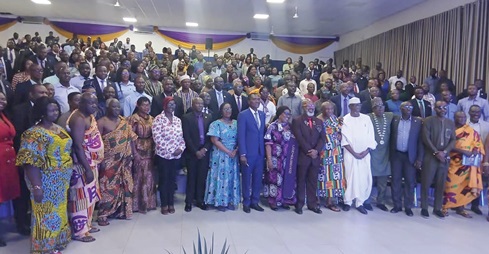
He made the announcement in a speech read on his behalf at the opening of the 2026 Logistics and Transport Conference and Annual General Meeting of the Chartered Institute of Logistics and Transport (CILT) Ghana at Fiapre in the Bono Region on Tuesday.
The three-day conference is on the theme: “Transforming Ghana’s Transport Infrastructure for Inclusive and Sustainable Growth.”
It brought together transport and logistics stakeholders to deliberate the future of the country's transport infrastructure and the need for a safer, inclusive and sustainable transport system.
Mr Nikpe said stationary and broken-down vehicles had become a significant road safety concern and required a more effective response.
He said under the new system, a motorist whose vehicle broke down would contact the subscribed towing service, which would dispatch the nearest available towing vehicle.
Mr Nikpe said the system would operate through a technology-enabled platform similar to ride-hailing applications, but dedicated exclusively to towing services.
He expressed the hope that the arrangement would make vehicles left stationary on roads and causing crashes a thing of the past.
The announcement comes after earlier attempts to implement a mandatory towing regime generated public controversy, particularly over the payment of a compulsory towing levy.
The government subsequently reviewed the arrangement and explored alternative models involving private towing operators and insurance.
Mr Nikpe said the new system would open the towing sector to competition, with towing companies required to register with the National Road Safety Authority (NRSA) before operating under the new regime.
He said the government would soon engage towing operators to explain the requirements and operational framework.
He stressed that the new arrangement had been designed to avoid the monopoly concerns associated with the earlier towing initiative.
Mr Nikpe added that any company with the capacity to provide towing services would be allowed to participate after meeting the requirements.
He said the government would also embark on a nationwide public education campaign ahead of the implementation of the new law.
Inclusive transport
The National President of CILT Ghana, Alhaji Mohammed Saaka Damba, called for a transport system that deliberately accommodated persons with disabilities (PWDs).
He said although the country had enacted laws and signed international agreements to protect the rights of PWDs, accessibility remained largely absent in the design of public transport infrastructure.
Rail, watercourses
The Global Chairperson of Women in Logistics and Transport (WiLAT), Dr Doreen Owusu-Fianko, underscored the need for greater investment in railways and inland watercourses to reduce pressure on the road network and cut carbon emissions.
She advocated investment in electric buses and stronger intra-city public transport systems to reduce reliance on conventional commercial minibuses, popularly known as trotros.
Writer's email:
