
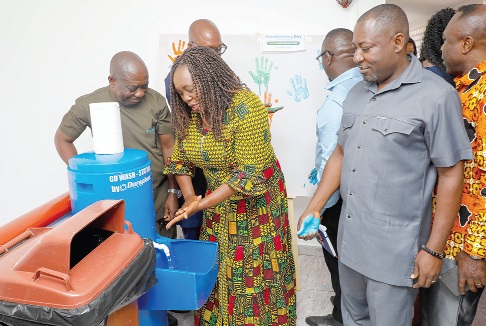
Speakers at an event held to mark this year's Global Handwashing Day have called on the government to integrate handwashing into the national priorities.
They said integrating handwashing into the national development priorities would ensure that there was sustainable funding and proper infrastructure to promote hygiene and health.
Those who made the call were the Chairperson of the Coalition of NGOs in Water and Sanitation (CONIWAS), Dr Beata Awinpoka Akanyani; a senior sanitation specialist at the World Bank, Dr Harold Esseku and the officer in charge of the World Health Organisation (WHO)-Ghana, Dr Frank Lule.
In separate statements at the launch of the Global Handwashing Day held at the Ministry of Local Government, Chieftaincy and Religious Affairs in Accra yesterday, they underscored the need to strengthen ministerial and institutional coordination for effective handwashing to promote good health and social well-being.
The event, which was held on the theme: "I am a Handwashing Hero", drew stakeholders from the WHO, the Ghana Health Service (GHS), the Ghana Education Service (GES), CONIWAS and development partners.
Government commitment
The Deputy Minister of Local Government, Chieftaincy and Religious Affairs, Rita Naa Odoley Sowah, said the ministry would play a pivotal role in rallying both state and non-state actors to institutionalise handwashing.
In that regard, she asked all Metropolitan, Municipal and District Assemblies (MMDAs) to include the provision of handwashing facilities in their local plans and provide a budget for its implementation.
"I call on all MMDAs to make it a priority to put in place properly functioning handwashing infrastructure that will help people to wash their hands under running water and stay healthy to contribute to development," she said.
Ms Sowah also underscored the need for religious leaders and traditional authorities to use their positions to help promote handwashing.
Again, she urged food vendors, transport operators, managers of markets and educational establishments to install handwashing equipment to promote that practice.
National priority
For her part, Dr Akanyani said it was important to prioritise handwashing with soap as a national culture since that was a sure way to fight the spread of germs and build a healthy workforce for the country.
She said apart from ensuring the general health of citizens, the practice of proper hand washing resulted in improved productivity.
Against that backdrop, she called on schools, traditional authorities, religious organisations and other stakeholders to sustain the culture of hand washing beyond a single day's celebration.
Dr Esseku said handwashing needed to be treated as a national priority rather than an afterthought event.
While commending Ghana for sustaining the celebration of the Global Handwashing Day since its inception in 2008, he said it was worrying that the practice dipped after peaking during the COVID-19 period.
"We need all stakeholders, particularly the Ghana Education Service and the Ghana Health Service, to help champion and sustain it for health and social benefits," he said.
He said although the changing funding landscape had affected dedicated funds for WASH, it was important for it to be integrated into all projects.
Dr Lule said prioritising handwashing in the midst of limited resources required strong and dedicated leadership.
He called for institutional collaboration to achieve hygiene and health objectives for national development.
