
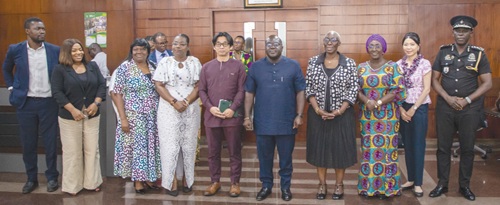
The Japan International Cooperation Agency (JICA) has paid a courtesy call on the Chief of Staff, Dr Julius Debrah, as part of activities marking 50 years of its professional training programme in the country.
The delegation, led by the Chief Representative of JICA Ghana Office, Takayuki Uchiyama, also invited the Chief of Staff to participate in the golden jubilee celebrations of JICA scheduled for February next year.
They were accompanied by senior alumni of the programme, including the President of the JICA Alumni Association of Ghana (JAAGHA), Lovia Afoakwa.
Dr Debrah, himself an alumnus of the programme, participated in a training programme in Japan in 2011, as part of an African delegation that studied sustainable tourism development.
The visit provided an opportunity for JICA to reflect on the impact of its training initiatives since the first batch of Ghanaian participants travelled to Japan in 1976.
Achievements
Mr Uchiyama highlighted the achievements of the programme and its contribution to Ghana's human resource development over the past five decades.
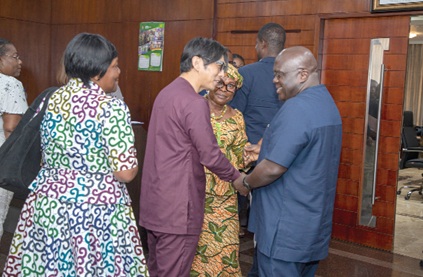
Dr Julius Debrah (right), Chief of Staff, in a hearty chat with Takayuki Uchiyama at the Jubilee House
He said more than 5,000 Ghanaian officials and professionals had benefited from the programme by the end of the 2025 Japanese fiscal year.
The training had evolved from short-term professional courses to include master's and doctoral degree programmes in Japanese universities, with more than 150 Ghanaians having earned postgraduate qualifications in Japan.
The programme covers six major development areas: health, agriculture, industry and tourism, education, governance and planning, and infrastructure and energy.
JICA had also made progress in promoting gender inclusion, with women accounting for approximately 40 per cent of beneficiaries between 2020 and 2025, compared with about 12.5 per cent during the period 1976 to 1994.
Focus
Mr Uchiyama further said the programme had focused on building the capacities of people whose acquired knowledge and skills continued to influence institutions and were passed on to colleagues and future generations.
He said the impact of the training extended beyond individual beneficiaries to contribute to the country's long-term development.
The initiative, which includes the Knowledge Co-Creation Programme, a training linked to JICA's technical cooperation projects and postgraduate scholarships, also maintained its activities through the COVID-19 pandemic, moving some courses online before resuming in-person training in Japan in 2022.
Beneficiaries remain connected through the JICA Alumni Association of Ghana, which provides a platform for professional networking, knowledge-sharing and collaboration.
The 50th anniversary celebration in February 2027 is, therefore, expected to provide an opportunity to recognise the achievements of the programme and strengthen the longstanding development partnership between Ghana and Japan.
Significance
Dr Debrah acknowledged the contribution of the Japanese government through JICA to the development of Ghana, adding that the knowledge, experience and work ethics acquired by beneficiaries in Japan were important to the accelerated development of the country.
He also expressed the government's desire to sustain its support for the programme in the years ahead.
