
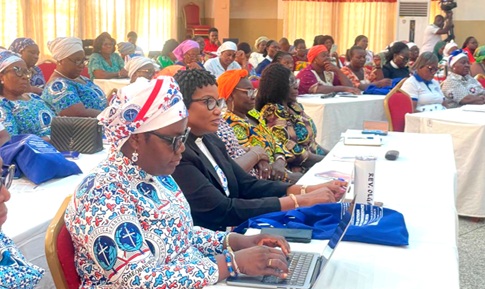
Women from Christian, Muslim and traditional religious communities have been urged to take an active role in addressing climate change and protecting the environment.
The Director of the Presbyterian Women’s Centre, Patricia Addy, who addressed the gathering, said climate change was no longer an abstract issue in Ghana, as its effects were already being experienced through changing weather patterns, drought, flooding and water challenges.
The call was made at this year’s Faith to Action Women’s Conference, where participants discussed how women could combine faith, climate action and sustainable livelihoods to build peaceful communities.
The conference, organised by the Centre for Interfaith Studies and Engagement in Africa (CISEA), was held in Accra on the theme: “Women, Climate Justice and Sustainable Peace.”
She said the situation at Abokobi, where residents had recently depended on the women’s centre for water amid a prolonged dry spell, demonstrated the need for urgent action to protect the country’s natural resources.
Galamsey
Mrs Addy said discussions on climate justice could not exclude illegal mining, popularly known as galamsey and its impact on water bodies, forests, livelihoods and future generations.
She said women, who played various roles as mothers, farmers, entrepreneurs, educators, community leaders and faith leaders, were particularly important to efforts to protect the environment and promote sustainable development.
“Faith must not remain only in our places of worship, but it must be translated into action that contributes to the peace, development and well-being of our society,” she said.
The guest speaker, Rev. Prof. Ebenezer Yaw Blasu, a lecturer at the Akrofi-Christaller Institute of Theology, Mission and Culture, said women were well positioned to champion environmental protection because of their role in nurturing and sustaining life.
He said the biblical account of creation, particularly the instruction for the Earth to “bring forth”, provided a basis for understanding the Earth as a source of life that required care and protection.
Livelihoods
Rev. Prof. Blasu said women could also turn environmental restoration into sustainable livelihoods by creating useful products from waste materials.
He cited the conversion of coconut husks into briquettes as one example of how women could protect the environment, while generating income for themselves and their families.
The Founder of the Benk-Huggs Foundation, Benedicta Kwakye, urged women and other members of society to speak up and participate in decisions aimed at protecting land, water bodies and forests for future generations.
She said women and children often bore the greatest impact when environmental conditions deteriorated and called for stronger action across faith communities to safeguard the country’s natural resources.
The conference, which marked the 15th edition of the Faith to Action Women’s Conference, sought to strengthen collaboration among women from different faith traditions and encourage practical action towards climate justice and sustainable peace.
