
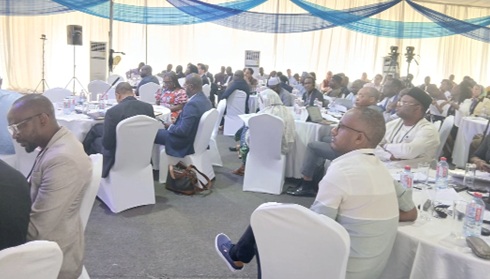
The Africa Centres for Disease Control and Prevention (Africa CDC) has launched a programme aimed at strengthening the continent’s capacity to build coordinated and effective ecosystem that can allow it to respond quickly to disease outbreaks.
Known as Africa Research Preparedness Programme in West Africa, it seeks to strengthen research governance, evidence generation, clinical trial readiness and regional coordination, while reinforcing African leadership in research preparedness and global health security.
Under the programme, clinical trial sites would be put up in countries to embark on researches whether there were outbreaks or no outbreaks, including working together to coordinate disease outbreaks in the region when they did occur.
West Africa, with its uniqueness in terms of disease burden, prone to all infectious diseases, being the world’s poorest of the poorest countries and limited capability to build hub-and-spokes for research preparedness, had been selected as the first regional pilot, while the Noguchi Memorial Institute for Medical Research (NMIMR), MRC Unit The Gambia, Burkina Faso and Nigeria have been selected as hubs for trials in the sub-region.
The success of the programme in West Africa will help inform expansion into East and Central Africa.
In attendance included representatives of regional and continental institutions such as the West Africa Health Organisation (WAHO), African Medicines Agency, World Health Organisation (WHO) AFRO, participating research institutions and scientists, national public health institutions and development partners.
Significance
The Director of the NMIMR, Professor Dorothy Yeboah Manu, said West Africa had witnessed several infectious disease outbreaks from Ebola, Lassa Fever and Monkey Pox, including some other infectious pathologies that were not found anywhere in the world.
Despite the problems, she said: “Countries are working in silos. Research institutions are working in silos.
So we are leveraging our uniqueness in terms of burden and also limited capability to build a hubs-and-spokes model for a research preparedness programme in West Africa.”
Prof.Yeboah Manu, however, said that under the programme, they would build capability and support others that had limited capability.
Efforts
The Director for Research, Clinical Trials and Innovation, Africa CDC, Prof. Placide Kingebeni Mbala, said over the past decade, Africa had strengthened disease surveillance, laboratory systems, public health institutions, and regional coordination, yet, for every major outbreak, they had been reminded of a fundamental reality.
“When emergencies occur, leaders need to make decisions, public health agencies need data to guide action, and researchers need systems that enable studies to begin rapidly.
Without these capabilities in place before a crisis begins, evidence generation is delayed precisely when it's needed most,” he said.
The Project Coordinator, Lassa Fever Coalition, WAHO, Dr Aishat Bukola Usman, said research must be ready before outbreaks, and that since 2023, WAHO had awarded approximately $505 million in research grants to West African institutions.
The WHO AFRO Country Representative in Ghana, Dr Fiona Braka, pledged her outfit’s preparedness to support the programme through technical guidance under the research and development blueprints and clinical trials.
Other speakers included the Head, Africa Strategy and Engagement at the Coalition for Epidemic Preparedness Innovations, Shingai Machingaidze; the Director of Public Health Division, Ghana Health Service; Dr Franklin Asiedu Bekoe, and the Head of Division Research and Development and Clinical Trials Coordination, Africa CDC, Dr Elvis Temfack.
