
The Ministry of Transport has called for increased private sector investment in transport infrastructure.
It said the sector required significant capital injection to develop systems capable of supporting the country’s growing urban centres to improve productivity.
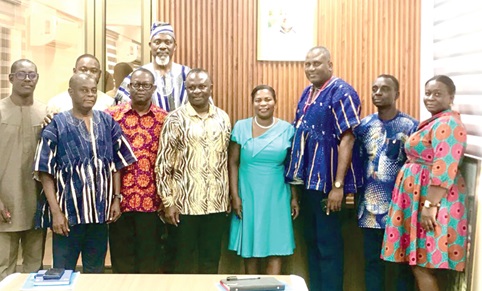
The Chief Director of the Ministry of Transport, William Kartey, made the call in Accra last Wednesday when the Graphic Communications Group Ltd (GCGL) and Stanbic Bank Ghana presented a report on transport policy recommendations to the ministry at its offices.
The report followed a thought leadership breakfast meeting organised by the two institutions earlier this year to examine challenges and financing options for the transport sector.
Mr Kartey said the ministry regarded the engagement as part of its consultation with stakeholders in developing transport policies.
He said private capital was needed to complement public resources and finance major transport infrastructure projects.
Private capital
Mr Kartey said the scale of investment required went beyond small amounts, particularly as the country sought to develop rail systems, sky trains, bus systems and better routing to respond to growing urbanisation.
“We need real private capital to develop the kind of transport system that can support the urban development we are seeing today,” he said.
He said the ministry had already identified several problems affecting the transport sector, including traffic congestion, and was working on policies to address them. He said recommendations contained in the report would be considered in the ministry’s policy development process.
Mr Kartey said the ministry was open to proposals from the private sector, particularly where such proposals could provide financing for transport infrastructure.
“If there are funds available from the private sector, we will look at how those funds can support the transport system we want to develop,” he said.
Mr Kartey said the ministry would input the recommendations into policy development.
He said the ministry would also provide quarterly updates on actions taken in response to the recommendations.
Beyond discussions
The Director of Marketing and Sales of GCGL, Franklin Sowa, said the breakfast meeting was designed to move beyond discussions of problems and provide practical solutions to challenges in the transport sector.
He said traffic congestion had implications for productivity, health and economic activity, making it necessary to treat transportation as a key part of national development.
Long-term finance
Mr Sowa said the report also examined ways of using long-term funds and other financing mechanisms to support infrastructure development.
He said creative fundraising, revenue-sharing arrangements and other structures could help to mobilise funds that were currently tied to future beneficiaries.
“We have ideas and plans, but plans require budgets to work. We need to explore financing structures that can provide the infrastructure now and allow repayment over time,” he said.
Mr Sowa said the report contained recommendations on transport policy, stakeholder engagement, transport alternatives and sustainable financing.
He said Graphic would continue to engage the ministry and seek updates on the implementation of the recommendations.
Mr Sowa said Stanbic Bank, which partnered Graphic on the initiative, remained supportive of the discussions despite being unable to attend the presentation because of other engagements.
