
The Government is restructuring the country’s public sector pay system across a two-year period which will conclude with the establishment and operationalisation of the Independent Public Emoluments Commission (IPEC).
The exercise will not be a change of name, but rather a change in how public sector salaries, allowances and benefits are decided, negotiated, regulated and managed.
The 2027-2028 restructuring period will be used to lay the legal, constitutional, institutional, technical and policy foundations of the new system.
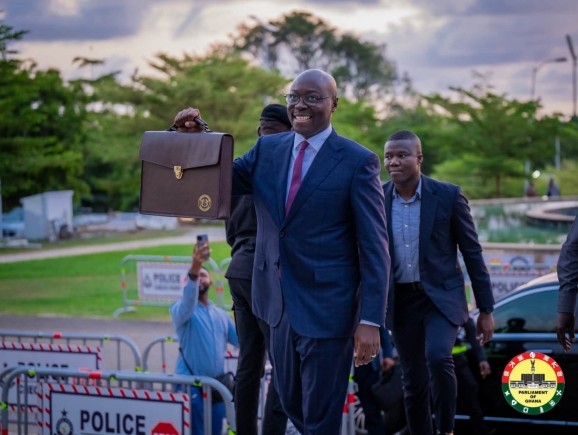
Presenting the government’s Budget Statement in Parliament last Thursday, the Minister of Finance, Dr Cassiel Ato Forson, said the transition would take place in four phases.
Phased delivery
Under phase one, the government would submit the IPEC Bill to Parliament in 2027, with the law expected to cover public institutions and state-owned enterprises (SOEs).
For phase two, the government would pursue the constitutional amendments needed to make IPEC a constitutional body to protect its independence and ensure that it outlives any one government.
Under phase three, Ghanaians will decide, through a national referendum in line with the requirements of the Constitution, whether Article 71 office holders such as the President, Ministers of State, Members of Parliament and Justices of the Superior Courts, should also come under IPEC.
Phase four will involve the implementation of four other policies, including a National Public Sector Emoluments Policy which would set the rules for how all public pay is determined, and a National Negotiations Policy which will make pay talks orderly, predictable and based on evidence.
The other policies will be a Performance-Based Pay Policy which will link pay to results, and a comprehensive framework for allowances and benefits which would bring order and fairness to what has become a crowded and uneven field.
“Together, these reforms will align remuneration with productivity, cost of living, institutional performance, and what the nation can afford,” Dr Forson said, stressing that “government will exercise restraint in approving new allowances, special salary structures, wholesale reviews of conditions of service and any other pay arrangements that could undermine the reform”.
He assured the public that “this is not a wage freeze. Existing lawful obligations will be honoured.
Established negotiation processes will continue. we are ending the piecemeal approach that created today’s unfairness and distortion”.
For state-owned enterprises (SOEs), he said one size would not fit all, and that each of them differed in their finances and in the markets where they operated.
Their boards, he said, would continue to develop and submit remuneration proposals, but within a transparent national remuneration framework.
SIGA
Dr Forson said IPEC would work closely with the State Interests and Governance Authority (SIGA) to make the new system work.
“A major lesson of the Single Spine pay reform is that fairness in pay cannot be secured by a salary structure alone. It needs an independent institution that can protect the system from interference, pressure and inconsistent decisions,” he said.
He, therefore, urged Organised Labour, public institutions, SOEs and other stakeholders to support the 2027 to 2028 national compensation reform.
“By the end of this transition, our goal is a public pay system that is fair to every worker, trusted by every citizen and rewards productivity.
A system in which every cedi spent on public sector pay delivers greater value to the people of Ghana.
Fair pay. Fair rules. A fair referee.
That is the promise of IPEC,” he said.
Commitment
The Government, the Finance Minister said, was committed to a public sector pay system that was fair, transparent and affordable, and that it must reward hard work, keep industrial peace and give Ghanaians value for every cedi spent.
The Single Spine Pay Policy was introduced in 2010 to ensure equal pay for work of equal value across Ghana’s public service, establishing a fair and unified salary structure.
But, the minister said, “over the years, that fairness has been eroded.
New allowances have multiplied.
Special salary arrangements have been granted. Some institutions have been exempted.
Pay decisions have been taken piece by piece, outside the system”.
“Today, two public service workers with similar qualifications, doing similar work, can take home very different pay simply because of where they work,” he added, emphasising that “compensation is a major component of government expenditure, and unfair or unplanned pay decisions (do) not only strain public finances, but also divert resources from essential services and undermine industrial harmony.”
Dr Forson said at the heart of the problem was a weakness in the institution that managed public sector pay.
The Fair Wages and Salaries Commission, he said, had done important work.
Pressures
“But it has not had enough independence.
It has been exposed to political and administrative pressures, and some pay decisions have not followed the cardinal principles of job evaluation and reward management or what the nation can afford,” he said, stressing that “a good salary structure is not enough.
We need a strong, independent institution with the authority to protect it, regardless of the political or institutional pressure.”
He said it was for that reason that President John Dramani Mahama announced the transition of the Fair Wages and Salaries Commission into an IPEC.
He said IPEC would be a credible, independent, and technically competent national institution, and that its job would be to regulate and monitor public sector pay, correct today’s unfairness, stop new disparities from emerging and strengthen fiscal discipline.
