
The government will create rice development hubs to organise production around irrigation, mechanisation, silos, modern mills, packaging and logistics.
The hubs will be located in the Afram Plains in the Eastern Region, the Volta Basin in the Volta Region, western Ghana and northern Ghana.
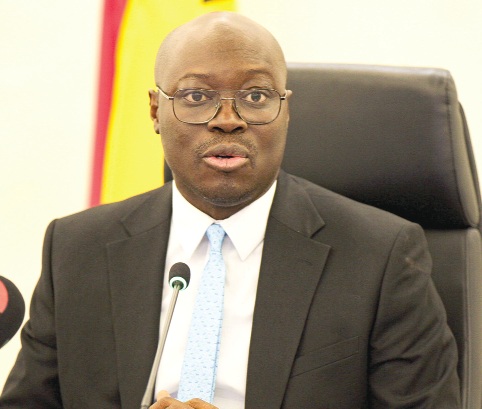
The Minister of Finance, Dr Cassiel Ato Forson, who announced this during the presentation of the 2027 Budget Statement to Parliament, explained that the hubs would bring an additional 100,000 hectares under production, target yields of five to six metric tonnes per hectare, and support about 125,000 jobs.
He further announced that all rice development hubs would benefit from targeted tax incentives covering irrigation, mechanisation, silos, modern mills, packaging and logistics.
"These incentives will lower investment cost, reduce post-harvest losses and help Ghanaian rice (to) reach consumers at competitive prices," Dr Forson added.
Public procurement law
He announced that the government was amending the public procurement laws to require that public funds spent on rice and other staples for schools, hospitals and other public institutions purchase only foodstuff grown in Ghana.
"This will ensure that public spending feeds our children, patients and other beneficiaries while providing a reliable market for Ghanaian farmers and creating jobs at home.
“The principle is simple: the money of the Ghanaian people must create opportunity for the Ghanaian people. If you spend their money to put rice on the table, that rice must come from their farms.
“Our public purse must nourish both those who eat and those who produce," the minister further explained.
Food security
He assured Ghanaians of food security in the government’s $3 billion allocation to build a commercially organised agricultural economy.
Dr Forson said agriculture already accounted for about 20 per cent of the country's economy, offered employment to almost 40 per cent of the citizenry and provided nearly 25 per cent of export earnings.
"The reach is even wider when transport, processing, packaging, trade and rural services are included.
"Yet Ghana spends billions of dollars each year importing food and agricultural products that can be produced competitively at home," Dr Forson observed in the Budget Statement.
Pillar two
Agriculture has been labelled as pillar two under four years during which the government expects to spend $10 billion to create "a modern Ghanaian economy" for jobs and prosperity.
"This pillar will turn Ghanaian land, water and enterprise into food security, lower inflation, rural incomes, industrial raw materials, exports and decent work.
"We will build eight integrated industries: rice, sugar, poultry, maize and soya feed, aquaculture, oil palm, vegetables and cocoa value addition," the minister announced.
He further announced that each industry would have its own commercial plan, financing structure, production targets, processing capacity, market rules and delivery unit.
Farm-to-market system
"They will operate through one national farm-to-market system," Dr Forson announced, adding that the system would connect secured land and water to improved seed and breeds, irrigation, mechanisation, extension, anchor farms and organised outgrowers.
"It will then connect production to storage, processing, packaging, transport, institutional purchasing, retail markets and export,” Dr Forson explained.
He stressed that the farm must no longer stand alone at one end of the value chain, while the market waited at the other.
"Production without storage creates gluts and losses.
Processing without reliable supply creates idle factories.
"Credit without markets leaves farmers in debt," the minister stated, giving an assurance that "we will fix this value chain".
