
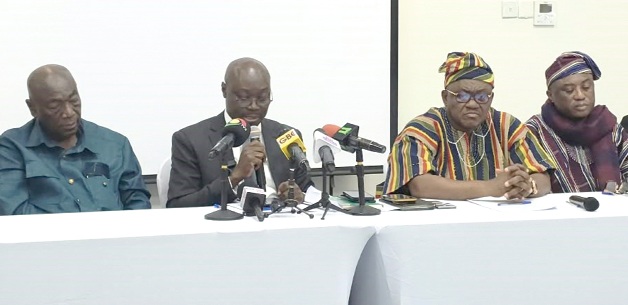
The government and Organised Labour have signed a Multi-Year Public Service Remuneration Agreement in which pay will be increased by nine per cent in 2027 and 10 per cent in 2028.
For 2027
Effective January 1, 2027, total remuneration will increase by nine per cent, made up of eight percentage points for base pay across-the-board and one per cent for Conditions of Service.
Again, effective January 1, 2028, there will be an increase of 10 per cent in base pay across-the-board, calculated on the applicable base pay at December 31, 2027.
The agreement was negotiated at the Public Services Joint Standing Negotiating Committee (PSJSNC) between the government, represented by the Fair Wages and Salaries Commission (FWSC) and the Ministry of Finance, and Organised Labour comprising workers’ unions and institutions within the Public Service.
2-Year framework
The January 1, 2027 to December 31, 2028 remuneration framework is to provide predictability and a stable environment for the transition from FWSC to the Independent Public Emoluments Commission (IPEC).
The 2028 Base Pay was agreed considering current inflation of 5.2 per cent and the government’s projection of eight per cent, with two per cent more or less, for the period.
If year-on-year inflation for December 2027 overshoots the midpoint of eight per cent by more than a factor of two, the PSJSNC shall reconvene to review the 2028 Base Pay.
The parties shall use the transitional period to review allowances to address distortions, and the government shall consult Organised Labour quarterly on reforms.
FWSC, on the other hand, shall retain its lawful functions until any transfer to IPEC takes legal effect.
The Chief Executive Officer of the FWSC, Dr George Smith-Graham, signed the agreement on behalf of the government, while the Secretary-General of the Trades Union Congress (TUC), Joshua Ansah, signed on behalf of Organised Labour.
It was witnessed by the Minister of Finance, Dr Cassiel Ato Forson, and the General Secretary of the Ghana National Association of Teachers (GNAT), Thomas T. Musah.
Commendation
Commenting on the agreement, Dr Forson commended Organised Labour and the government negotiating team for their cooperation, understanding and commitment to the national interest.
“Today marks a historic milestone in Ghana's public service remuneration negotiations. For the first time, government and Organised Labour have reached a two-year pay agreement," he said.
The agreement, he said, “is about more than salaries. It is about protecting workers' incomes, giving families greater certainty, and helping Government plan and manage public spending responsibly.”
Dr Forson said the government had demonstrated that fair pay for workers and responsible management of public finances could go hand in hand.
Dr Smith-Graham, for his part, said the negotiations had been particularly significant because they came at a critical period in the country's public sector compensation reform agenda, as "we transition from the FWSC to IPEC."
He explained that the decision to pursue a two-year salary agreement reflected our collective commitment to industrial harmony, predictability in public expenditure, income security for workers, and stability during this important institutional transition.
“We recognise the sacrifices of Ghanaian public sector workers and their invaluable contributions to national development.
Equally, we acknowledge Government's responsibility to maintain fiscal discipline while progressively improving the conditions of service of its employees," Dr Smith-Graham said.
Inflation
Mr Ansah, on the other side of the table, said that with inflation currently at 5.3 per cent, the 2027 base pay adjustment was above the prevailing inflation rate.
“We recognise, however, that this figure does not fully reflect the pressures workers face in meeting their daily needs.
While the agreement may not meet every expectation, it represents progress in our efforts to protect workers’ purchasing power," he said.
The TUC Secretary-General said it was also agreed that, should inflation in 2028 exceed 10 per cent or reach a level that substantially eroded purchasing power, the parties would reconvene to reopen negotiations.
“Hardworking Ghanaian workers deserve fair pay, equitable conditions of service and protection for their purchasing power,” Mr Ansah stressed.
