
The government is intensifying efforts to protect the country’s inland fisheries from pollution, overfishing and other destructive practices to secure fish stocks, strengthen food security and protect the livelihoods of fishing communities.
Also, it was investing in fisheries infrastructure, including landing sites, cold storage facilities, fish processing centres and organised markets, to reduce post-harvest losses and improve incomes.
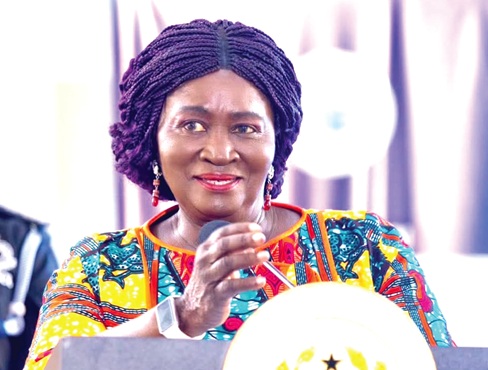
The Vice-President, Professor Naana Jane Opoku-Agyemang, made this known when she addressed the opening of the 2026 National Inland Fisheries Conference and Awards Ceremony in Sunyani last Saturday to commemorate World Fisheries Day.
She identified illegal mining-related pollution, poorly managed waste disposal, pressure on breeding and nursery grounds, climate change and inadequate storage and processing facilities as major threats to the sustainability of inland fisheries.
The Vice-President said the government was rolling out interventions that would help reduce post-harvest losses, improve incomes and create better opportunities, particularly for women in the fisheries value chain.
She said, for instance, the government was pursuing the development of Yeji and Kete Krachi into integrated fishing villages, with improved landing sites, cold storage facilities, fish processing centres and organised markets.
Prof. Opoku-Agyemang stated that additionally, plans were underway to establish a dedicated inland fish market in Accra to provide better facilities for traders transporting fish from the Volta Lake and other inland fishing communities.
She stressed, however, that infrastructure development must go hand in hand with efforts to protect the water bodies that sustain the sector.
Legal framework
On the regulatory front, Prof. Opoku-Agyemang said the Fisheries and Aquaculture Act, 2025, provided a legal framework for strengthening the governance, conservation and management of the sector.
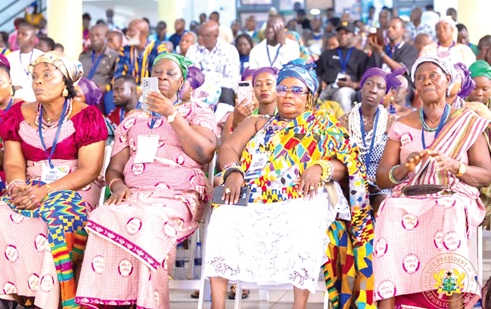
Participants in the conference
She underscored the need to implement the National Inland Fisheries Management Plan, which emphasised science-based resource management, protection of breeding and nursery grounds, monitoring and surveillance, and the involvement of local communities.
She urged the Ministry of Fisheries and Aquaculture, the Fisheries Commission, traditional authorities and local government institutions to work together to translate the recommendations of the conference into practical action.
Protect children
The Vice-President also expressed concern about the exploitation of children in hazardous fishing activities, insisting that their protection must remain an integral part of the country's fisheries development agenda.
She called for greater opportunities for women and young people through improved processing facilities, access to finance and skills development.
The Minister of Fisheries and Aquaculture, Emelia Arthur, said the decision to focus this year's World Fisheries Day celebrations on inland fisheries was to recognise the contributions of men and women working across the country's 16 regions.
She said the three-day programme included exhibitions demonstrating alternative ways of preparing catfish and tilapia, as well as technical discussions on inland fish stocks, water safety, licensing, insurance and the welfare of fishers.
Mrs Arthur said the conference had also validated and adopted Ghana's first National Inland Fisheries Management Plan, adding that the government planned to invest in fishing village infrastructure as part of efforts to address the country's fish production deficit.
Improve safety on waterways
The Deputy Minister of Transport, Dorcas Affo-Toffey, said the government was working to improve safety and connectivity on inland waterways.
She said more than 2,000 approved life jackets had been distributed at vulnerable landing sites, with measures being rolled out to register and inspect commercial passenger boats and to train and licence boat operators to improve safety on the waterways.
Awards ceremony
At the ceremony, 22 individuals were honoured for their contributions to the fisheries sector.
They included Joshua Agbezudor, National Best Marine Fisher; Prosper Gakpleazi, National Best Aquaculture Farmer; Andrews Boye Ahorsu, National Best Inland Fisher; and Beauty Deku, National Best Fish Processor.
Joyce Precious Addae and Richard Nana Gyasi were recognised as the Best Fisheries Extension Officers for the Northern and Southern zones, respectively.
A further 16 individuals, one from each of the country's 16 regions, were honoured as Regional Best Fishers for 2026.
Writer's email:
