
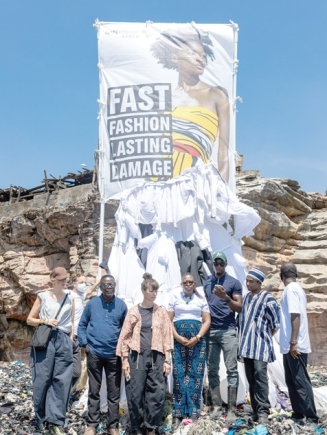
Lobal fashion brands, including H&M, Primark and Marks & Spencer, have been identified among the brands whose garments accounted for a significant portion of textile waste collected from beaches, markets and dump sites across Accra.
The brands were identified in a Greenpeace Africa brand audit of 201 discarded garments collected from James Town Beach, Kantamanto Market and Agbogbloshie between October 2 and 5 this year.
Greenpeace Africa released the findings at James Town Beach as part of its campaign called “waste colonialism and the environmental and economic effects of the global fast-fashion industry”.
The organisation also unveiled a six-metre installation made from hundreds of discarded garments to draw attention to the growing volume of textile waste entering Ghana.
Brand waste
The Project Lead for the Pan African Plastics Project at Greenpeace Africa, Hellen Kahaso Dena, said the organisation was concerned about the volume of unusable clothing entering Ghana through the second-hand clothing trade.
She said discussions with traders at Kantamanto indicated that a significant proportion of the clothing arriving at the market was unsuitable for reuse or resale.
According to her, traders estimated that about 40 per cent of the clothing entering the market was waste.
Ms Dena said Greenpeace was not advocating a complete ban on second-hand clothing because of the importance of the trade to livelihoods.
“What we do not want is for fashion brands in the global north to actually use that loophole to continue dumping,” she said.
She called on the government to ban what Greenpeace describes as “dead waste”, referring to textile imports that cannot be reused, repurposed or resold.
She also urged the government to strengthen support for local textile and fashion industries to enable Ghanaian producers and artisans to expand their businesses.
Environmental concerns
The Head of Investigations at Greenpeace Africa, Sam Quashie-Idun said the organisation visited James Town Beach, Kantamanto and Agbogbloshie to collect textile samples and engage traders and other people involved in the second-hand clothing trade.
He said the exercise found labels from H&M, Primark, Marks & Spencer and Next, among other international brands.
Mr Quashie-Idun said the volume of discarded clothing also raised concerns about plastic and microplastic pollution because many garments were made from synthetic fibres.
He referred to Greenpeace’s 2024 report, “Fast Fashion, Slow Poison”, which found that 89 per cent of 164 discarded garments tested at three dumpsites in the Greater Accra Region contained synthetic fibres.
He said the earlier investigation also examined the burning of textile waste as fuel at three public washhouses in Old Fadama.
According to him, tests conducted during the earlier investigation detected benzene, a known carcinogen, at levels at some washhouses reportedly reaching 200 times European safety standards.
He stressed, however, that those findings were based on samples collected in 2023 and were separate from the latest audit of 201 garments.
Producer responsibility
A Greenpeace spokesperson from Sweden, Isabelle McAllister called for stronger Extended Producer Responsibility (EPR) regulations requiring fashion companies to contribute towards managing the environmental impact of their products throughout their life cycle.
She said companies should contribute more meaningfully towards addressing the waste generated by the global fashion industry.
Ms McAllister also opposed a blanket ban on second-hand clothing imports, saying the trade remained important to Ghana’s economy.
She urged fashion companies to reduce production volumes and improve the quality of garments entering the second-hand market.
