
Ghana has stepped up its fight against river blindness with a second round of mass drug administration, targeting more than five million people annually in 86 endemic districts, as the country intensifies efforts to eliminate the debilitating disease by 2030.
The Ghana Health Service (GHS) is leading the November 15 to 29, 2026 campaign, during which health workers and community drug distributors will provide free medication to eligible residents across 15 regions to interrupt transmission of the disease.
The renewed campaign follows the treatment of more than 4.7 million people during the first round between June 20 and July 10, representing a national treatment coverage of 86.1 per cent.
However, health authorities say stronger community participation and improved household registration are needed to close existing gaps.
The elimination drive has received a major boost from a $4.76 million grant from the Mohammed bin Rashid Al Maktoum Global Initiatives (MBRGI) to fund a three-year programme being implemented by the Noor Dubai Foundation in partnership with the Ministry of Health and the GHS.
The Director-General of GHS, Dr Samuel Kaba Akoriyea, said the country could not afford to relent in the campaign while river blindness continued to threaten the sight, livelihoods and productivity of people in affected communities, particularly farmers and children.
Intensifying elimination efforts
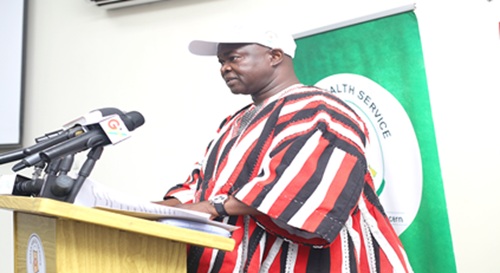
Speaking at a media briefing in Accra yesterday to launch the second round, Dr Akoriyea said the country had made significant progress since the national programme began in 1997, reducing the number of districts requiring treatment from 152 to 86.
He said the GHS was strengthening household registration under the Free Primary Healthcare initiative, improving supervision and training for community drug distributors, and testing electronic data collection in selected districts to improve campaign planning and monitoring.
He said the service was also considering increasing the annual treatment rounds to three from next year to accelerate progress towards the 2030 target.
Dr Akoriyea urged residents in affected communities to welcome campaign teams, ask questions about the medication and take it if eligible.
He also called on traditional and religious leaders, teachers and the media to help tackle misinformation and encourage participation.
Economic benefits
The Chief Executive Officer (CEO) of Noor Dubai Foundation, Dr Manal Taryam, said the three-year programme, funded by MBRGI, would support twice-yearly mass treatment, community surveys to identify areas where transmission persisted, and training for local health workers and community drug distributors.
She said the first round, supported by Sightsavers, reached close to 4.7 million people across the 86 targeted districts, representing 86.1 per cent of the target, while 20,800 people received training.
Dr Taryam said the programme was projected to generate more than $410 million in economic benefits over the next 30 years through increased productivity, reduced healthcare costs, stronger livelihoods and improved educational opportunities for children.
Support campaign
The Director of Public Health at the GHS, Dr Franklin Asiedu-Bekoe, called on the media to intensify public education and provide accurate information on the campaign to encourage eligible residents to participate.
He said mass drug administration remained an important intervention in eliminating neglected tropical diseases as public health problems by 2030.
Mr Asiedu-Bekoe expressed appreciation to development partners, including Noor Dubai Foundation, Sightsavers, Medicines Development for Global Health and the Charitable Trust, for supporting Ghana’s disease elimination efforts.
He also commended health workers, community drug distributors, volunteers, traditional authorities and other stakeholders for their contributions to the campaign.
