
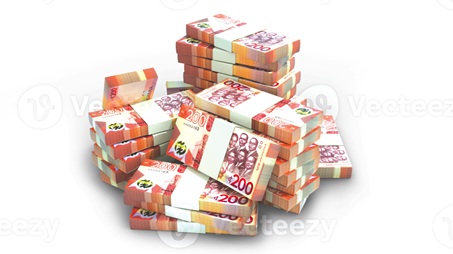
Very cedi in your pocket began as someone else’s decision.
Someone decided it should exist.
Someone received it first.
And someone else, usually you, absorbed the consequences later.
Most Ghanaians never ask who sits at each of those three points.
That silence is expensive, and it is time we broke it.
The privilege nobody taught you Seigniorage is the benefit that goes to whoever issues money.
Kings once earned it by stamping coins worth more than the metal inside them.
Today a central bank issues currency, a liability that pays no interest, and acquires assets in return.
Those assets can earn income.
Money that costs nothing to hold, funding assets that pay, is one of the oldest privileges in economics.
Now look at the Bank of Ghana’s own audited accounts.
Currency in circulation rose from about GH¢71.64 billion in 2024 to GH¢83.82 billion by December 2025.
That is GH¢12.18 billion more, a rise of roughly 17 per cent in one year.
Over the same period, currency issuance expenses fell from GH¢1.01 billion to GH¢471.39 million, and only GH¢277.56 million of that went to printing notes and minting coins.
These are not opposition talking points.
They are the Bank’s own disclosures.
Before you shout: The fine print
Precision is what separates analysis from noise.
“Currency in circulation” is a net figure, after deducting cash held by the Bank and its agencies.
The GH¢12.18 billion rise does not prove that much in fresh notes was dumped on the public.
The Bank also reported a substantial operating loss in 2025, so issued money cannot be presented as government profit.
But precision cuts both ways.
If it is not profit, then what is it?
What assets, transactions and productive activity stood behind that additional currency?
Nobody has answered that clearly for the public.
The tax you never voted for
The Ghana Revenue Authority does not collect the inflation tax, no receipt is issued, and Parliament never debates it.
It is simply the purchasing power that drains from every cedi you hold while prices climb.
Take the World Bank’s annual consumer-price series.
Compounded from 2005 to 2025, the general price level rose about sixteen-fold.
A basket of goods costing GH¢100 at the start would cost roughly GH¢1,628 at the end.
Picture a woman who saved GH¢100,000 for retirement.
The figure on her statement never changes.
What it buys shrinks every year.
The pensioner, the salaried worker, the trader holding working capital and the family hoping to leave something to its children all pay this tax, and not one of them was asked.
The poorest pay the most.
They keep more of their wealth in cash and have no land, foreign currency or equity to hide in.
The wealthy have escape routes.
The poor have only the cedi.
I will not insult your intelligence by blaming every price rise on money creation.
Depreciation, imported fuel, food shortages, supply disruptions and taxes all push prices up.
The honest demand is not “stop printing.”
It is explain: why was this money created, who received it first, and what happened next?
The wealth illusion
A nation does not get rich because its central bank can issue banknotes.
If it did, every country with a printing press would be wealthy.
Countries get rich because their people produce what the world wants to buy.
Ghana digs gold, harvests cocoa and pumps crude oil.
Then we import machinery, processed foods, manufactured goods and industrial inputs, often made from raw materials that left our own soil.
We export the ingredients and import the meal.
This is where monetary policy and industrial policy collide. Credit that finances consumption chases imports and drains foreign exchange.
Credit that finances factories, agro-processing, energy, machinery and export capacity expands what the economy can supply and earn.
The same cedi can build a nation or hollow one out, depending on where it lands.
Six demands Ghana should make
Complaining is cheap. Here is what citizens, journalists and Parliament should demand:
1.An annual Monetary Accountability Report, published in plain language, showing currency issued, growth in reserve money and broad money, and what each cost.
2.A full breakdown of government financing, separating what came from the central bank from what came from commercial banks.
3.A disclosure of income earned on monetary assets, together with the cost of mopping up excess liquidity, so the public can see the real economics of issuance.
4.A clear account of transfers between the Bank of Ghana and government, so that no one can hide a fiscal operation inside a monetary one.
5.A production test for new credit.
Report how much newly created financing went into factories, agro-processing, energy and export capacity, and how much into consumption and imports.
6.Independent verification of gold reserves, with transparent management and protection from political misuse, before any gold-backed settlement scheme is trusted.
On gold, let us not worship it as magic.
Gold-backed settlement in selected trade transactions could reduce dependence on third-party currencies, and it deserves serious study.
But gold alone cannot guarantee the cedi. Institutions, production, public confidence and discipline must stand beside it.
None of this bans money creation. Modern economies need flexible money.
The point is that expansion must never become a substitute for productivity and fiscal discipline.
Follow the cedi
The trader pays more to restock.
The manufacturer pays more for imported machinery.
The worker gets a raise that never becomes a better life.
The pensioner watches a lifetime of savings thin out.
Meanwhile, those holding property, productive businesses and foreign assets find ways to shelter.
This is why monetary policy is not a quiet seminar for economists.
It decides who owns the nation’s wealth tomorrow.
So stop judging monetary success by how many cedis circulate.
Judge it by how much more food we grow, how many factories switch on, how much machinery we build, how much gold we keep or deploy wisely, how much energy we generate and how many dollars our exports earn.
The question that should keep policymakers awake
The Bank of Ghana must safeguard monetary and financial stability.
The government must manage public finances and make room for production.
Neither should be allowed to retreat behind technical jargon while ordinary citizens carry the cost.
We keep asking how cheaply the Bank can print a GH¢200 note.
That is the wrong question. The right one is: what additional national wealth does that GH¢200 create?
If new money expands output, strengthens exports and protects citizens’ purchasing power, it serves development.
If it only multiplies claims on an economy that has not grown, we are manufacturing money without manufacturing wealth.
Ghana will not become rich because it can print its own currency.
It will become rich when it can produce, manufacture, trade and protect the real value of what its people make.
That is the difference between issuing money and building a nation.
Henry Bruce is a Money Expert whose work examines monetary systems, banking, resource-backed trade, financial sovereignty and the relationship between money and productive national wealth.
