
Ghana’s human capital development strategy is falling short if industries cannot find the skills they need while graduates struggle to secure jobs.
Addressing the mismatch would require the country to align education and skills training more closely with labour-market demand, particularly in sectors expected to drive the country’s industrialisation.
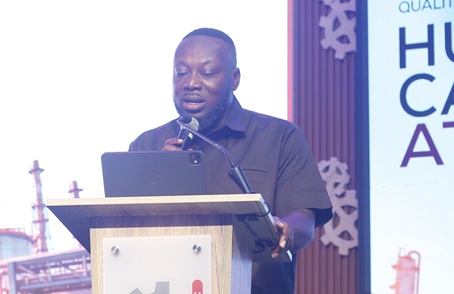
The Minister for Youth Development and Empowerment, George Opare Addo, who made the assertion, said the country must identify high-potential sectors over the next five to 10 years and determine the skills they would require.
Speaking at the Design and Technology Institute’s (DTI’s) sixth Annual Precision Quality on Human Capital at Work Forum, Mr Addo said: “The challenge is not simply to educate more people or issue more certificates.
It is to ensure that the knowledge and skills we develop translate into productive employment, thriving businesses, higher incomes, and ultimately national development.”
Long-term national strategy
Mr Addo stressed the need for a durable national human capital strategy that transcended changes in political administration.
“We cannot afford to change our fundamental human capital priorities every time political leadership changes,” he said.
The Youth Development and Empowerment Minister proposed a coordinated national framework with clearly defined institutional responsibilities, sustainable financing and measurable indicators covering employment, earnings, productivity and enterprise growth.
He emphasised that Ghana’s youthful population represented a significant national asset, but its economic potential could only be realised when young people acquired relevant skills and have access to meaningful opportunities.
He said achieving these would require coordinated action among government, industry, training institutions and workers.
The Government, he explained, must provide an enabling environment and essential infrastructure, while employers and training institutions worked together to ensure skills development responded to actual labour-market demand.
Mr Addo said Ghana must also recognise the value of skilled trades alongside traditional professions and ensure that training programmes were connected to jobs, markets and opportunities for enterprise creation.
High-income ambition
Programmes in apprenticeships, employment, national service and entrepreneurship, the Minister stressed, should function as a connected pathway that took young people from learning and competence development to employment and business creation.
The Founder of DTI, Constance Swaniker, said human capital development would be central to Ghana’s ambition of becoming a high-income country by 2057.
She argued that the country’s long-term prosperity would depend less on the resources beneath its soil and more on the capabilities and productivity of its people.
Ms Swaniker said Ghana’s large youth population presented both an opportunity and a challenge, particularly at a time when many young people were struggling to find employment.
“Human capital is not an educational input; it is a productive asset.
A certificate is not the finish line.
Productivity is,” she said.
She called for collective action involving government, industry, academia, development partners and young people to establish common priorities, commitments and measurable targets towards 2030.
Human capital built over time
The Director-General of the National Development Planning Commission (NDPC), Dr Audrey Smock Amoah, said human capital must be viewed as something developed throughout a person’s life rather than as the responsibility of a single institution or sector.
She said an effective strategy should equip people with capabilities they could apply throughout their lives and across the economy.
Dr Amoah called for multiple pathways into employment and enterprise instead of relying predominantly on the conventional progression “from school to a degree and then to a white-collar job.”
