
Ghana’s experience in accessing results-based climate finance offers a practical road map for West African countries seeking to strengthen their readiness for Reducing Emissions from Deforestation and forest Degradation (REDD+) payments, the Deputy Chief Executive of the Forestry Commission, Timothy Ataboadey Awotiirim, has said.
He said the country had built the institutional and technical systems required to demonstrate forest-emission reductions, including a national forest monitoring system, a forest reference emissions level, safeguards and information systems and a REDD+ strategy.
He said, for instance, in 2025, the country received $21.8 million from the World Bank for emission reductions under its Ghana Cocoa Forest REDD+ Programme due to the efforts that have been sustained.
“None of this happened overnight, and none of it happened alone. It took years. It took years of institutional coordination, patient capacity building, and conversations with others and communities about what they could expect,” he said.
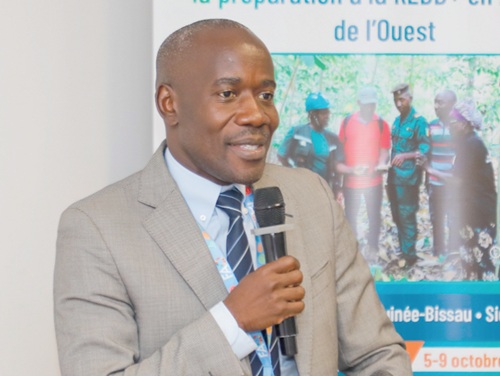
Mr Awotiirim was speaking at a South-South workshop organised by the Food and Agriculture Organisation of the United Nations (FAO) in Accra last Tuesday.
The workshop brought together representatives from Benin, The Gambia, Guinea, Guinea-Bissau and Sierra Leone to share experiences and strengthen readiness to access climate finance for Reducing Emissions from Deforestation and forest Degradation. (REDD+).
The workshop highlighted progress, innovations and opportunities for results-based climate finance and stronger forest governance in West Africa and featured presentations on the status of each nation.
Ghana’s experience
Mr Awotiirim said the country had submitted its forest reference emissions level to the United Nations Framework Convention on Climate Change (UNFCCC) for technical assessment, while integrating REDD+ into its national reporting and carbon-accounting arrangements through the Ghana Cocoa Forest REDD+ Programme.
The systems, he said, had subsequently been tested through verified results, enabling the country to secure more than $21 million in results-based payments from the World Bank’s Carbon Fund.
“That is why South-South exchange matters. Our forests do not stop at national borders. And neither should our solutions,” Mr Awotiirim added.
He said the workshop would allow participating countries to examine the country’s experience in forest monitoring, safeguards, measurement, reporting and verification.
He urged delegates to openly discuss bottlenecks such as coordination, staff turnover, financing gaps, community expectations and safeguards.
Mr Awotiirim said lessons would be shared openly, including failures and encouraged countries to strengthen links among forest monitoring, greenhouse-gas inventories, reference levels and transparency reports, saying understanding those systems could improve reporting and access to climate finance.
Benefits for communities
The FAO Representative to Ghana, Meshack Oguna Malo, said the ultimate measure of success in climate financing should be whether the resources reached the communities whose livelihoods depended on forests.
He said his own professional background as a forestry extension officer had reinforced his belief that climate finance should translate into tangible benefits for communities.
Mr Malo said there remained a significant gap between the climate finance available globally and countries’ ability to access those resources.
He said FAO was therefore using the South-South cooperation platform to share experiences and help participating countries strengthen their capacity to secure financing.
Mr Malo said the country’s experience offered an important learning opportunity for the visiting delegations, noting that the country had gone through a lengthy process of developing the institutional and technical capacity required to access results-based finance.
The FAO representative said the organisation was committed to supporting each of the participating member states to improve their ability to access climate financing.
He said the workshop was particularly important because FAO wanted all the participating countries to become engaged in the financing opportunities available for forest and climate-related programmes.
