
Ghana has won a seat at one of global tourism's important decision-making tables.
But the significance of its election to chair the UN Tourism Executive Council in 2027 lies not in the title itself, but in what the country can do with the influence, access and responsibility that come with it.
At the 127th session of the Executive Council in Abu Dhabi last Wednesday, Ghana defeated Argentina 19 votes to 14.
It was a contested election, not a coronation.
Argentina is an established tourism destination with a formidable diplomatic presence.
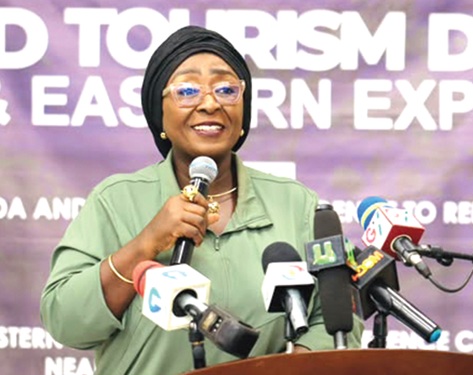
Winning a secret ballot against such a candidate says something about the goodwill Ghana enjoys among member states, as well as the work of the delegation led by Tourism, Culture and Creative Arts Minister, Abla Dzifa Gomashie.
Ghana joins a small group of African countries to have occupied the position in recent years. Zambia chaired in 2018, Kenya's Najib Balala was elected chair in 2019, and Côte d'Ivoire secured the position for 2022 (also beat Argentina to win).
Ghana's turn presents an opportunity, but also raises an important question: what exactly does the chairmanship mean, and how should Ghana and Africa use it?
Understanding the Council
The simplest way to understand UN Tourism is to picture it as a company.
The General Assembly (GA), comprising member states, is the shareholders' meeting.
The GA meets every two years.
It sets the broad direction, approves the budget and elects leadership.
The Executive Council acts like the board of directors, overseeing the programme of work, budget and implementation of the organisation's mandate.
The Secretariat is management, led by the Secretary-General, who runs the organisation's day-to-day affairs.
The Council elects its chair and vice-chairs annually.
Brazil holds the chair this year, with Slovenia and China as vice-chairs.
From January, Ghana will preside over the Council.
The Council meets twice in a calendar year, typically in May and November.
To be clear, Ghana will not run UN Tourism with this election.
It will chair sessions, facilitate deliberations, help steer the Council's agenda and work closely with the Secretary-General.
In multilateral diplomacy, that is meaningful influence.
The chair cannot dictate outcomes, but can help determine which conversations happen, how they progress and where consensus is pursued.
An agenda beyond the title
In her letter to the Secretary-General, Madam Gomashie outlined three objectives: strengthen collaboration among member states, enhance the Council's effectiveness and support the organisation's mandate. She also expressed Ghana's interest in creating a platform for Africa's collective interests and perspectives.
The ministry has identified six priorities: sustainable tourism development, investment promotion, cultural and heritage tourism, youth empowerment, climate resilience and inclusive growth for local communities.
These are worthy ambitions.
The challenge is to translate them into a focused agenda, with specific issues advanced, partnerships developed and outcomes that can be assessed before Ghana's term ends.
A chairmanship is a limited window, and spreading attention across too many priorities risks achieving little beyond visibility.
What it could mean for Africa
For Africa, Ghana's chairmanship offers an opportunity to move the continent's tourism priorities closer to the centre of global discussions.
The challenges are familiar. Air connectivity remains expensive and fragmented.
Visa regimes continue to complicate travel between African countries.
Tourism businesses struggle to access investment and financing, data systems remain weak, and climate change increasingly threatens coastal, wildlife and nature-based destinations.
Ghana can use the chair to champion intra-African travel, advocate more practical financing mechanisms for tourism businesses and elevate cultural and heritage tourism, including the connections between Africa and its diaspora.
It can also push for greater recognition of tourism's contribution to jobs, trade, community livelihoods and economic resilience.
But Ghana cannot speak for Africa simply because it is an African country holding the chair. It must build consensus with other member states, regional institutions and the private sector.
The experiences of Zambia, Kenya and Côte d'Ivoire offer a starting point for building continuity, rather than allowing Africa's priorities to change with each rotating chairmanship.
The timing is particularly useful. Ghana will also host the 70th session of the UN Tourism Commission for Africa in 2027, coinciding with its 70th anniversary of independence.
Holding both platforms offers a rare opportunity to connect continental discussions directly to global tourism governance and build momentum around shared African priorities.
Ghana must walk the talk
For Ghana, the benefits include international visibility, diplomatic access, credibility and opportunities to deepen relationships with investors, partners and tourism decision-makers.
The chairmanship could strengthen the country's positioning as a destination for international meetings and business events.
But global visibility must be matched by domestic performance. In 2025, international arrivals grew by something more enduring than a diplomatic milestone. just 1.4 per cent to approximately 1.3 million, while tourism receipts fell.
Ghana cannot credibly lead conversations about investment, inclusive growth and destination competitiveness if its own tourism performance is stagnating.
The coming year should be an opportunity to strengthen tourism data, improve investment facilitation, raise service standards, grow domestic tourism and ensure that institutions deliver more effectively.
Hotels, tour operators, MICE organisers and creative businesses must equally position themselves to convert the attention and relationships generated by the chairmanship into tangible opportunities.
A responsibility, not a trophy
Ghana's victory in Abu Dhabi is worth celebrating. But a chairmanship is ultimately judged by what it achieves, not how it was won.
If Ghana uses 2027 to advance a coherent African tourism agenda, build meaningful partnerships, raise its own standards and leave the Council more effective than it found it, this election will be remembered as a turning point.
If it treats the role as a trophy, the applause will fade long before the term ends.
The chair is ours.
Now the work begins.
