
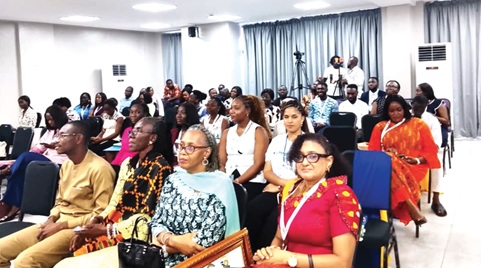
The Ghana Anaesthesiologists Society (GAS) have celebrated 30 years of practice with a call for the development and strict enforcement of national standards to ensure safe surgical care in every hospital.
The President of the Society, Dr Irene Wulff, who made the call, said the immediate strategic focus must be the development and strict implementation of national standards and clinical guidelines.
"Standardising our protocols in every corner of the country will elevate the baseline of surgical care for every Ghanaian," she stressed.
She was addressing the maiden Annual General and Scientific Conference of the GAS in Kumasi, which brought together practitioners, representatives of teaching hospitals and policymakers.
It was on the theme: “Global standards; Local impact, advancing anaesthesia practice in Ghana”.
From only six physician anaesthetists in the 1990s serving a population of 14.7 million at the start of the decade and 18.8 million by its end, the membership of the Society has grown to more than 200.
Challenging
"In the 1990s, clinical practice was incredibly challenging, often relying on nothing more than a stethoscope strapped to the patient's chest and a finger on the pulse to monitor vitals. In many instances, patients had to be ventilated by hand throughout surgery," she said.
The growth, she said, was driven by the establishment of the Anaesthesia programme at the Ghana College of Physicians and Surgeons and support from diaspora members.
Expanded training
Dr Wulff said the Society had aggressively expanded hands-on training, including the SAFE - Safer Anaesthesia from Education - courses, as well as conducting SAFE Paediatrics and SAFE Obstetrics.
She said the maturity of the specialty was evident in the emergence of sub-specialty societies, including the Critical Care Society, the Pain Society and groups for obstetric and paediatric anaesthesia.
"We are not only perioperative physicians but we are present in emergency rooms, endoscopy suites, radiology suites, cath labs and anywhere else along the patient pathway.
We are the steady, unbroken thread of safety running through our entire hospitals," she said.
"We must ensure that high-level care is accessible at regional and local hospitals. Once the government establishes the infrastructure and equipment, we are ready to provide the human resource," she added.
Critical care services
The General Secretary of the Society, Moses Siaw-Frimpong, said for a long period, training was not expanded, resulting in extremely low numbers.
He said critical care services were needed across the country but could be found in fewer than ten hospitals due to human resource constraints, a situation that contributed to high maternal mortality.
Writer’s email:
