
The Ministry of Gender, Children and Social Protection, in partnership with the United Nations Population Fund (UNFPA), is leading the development of a National Kayayei Management Framework to address the challenges associated with the migration, protection and welfare of head porters, particularly young women and girls.
The intervention, which has the backing of the Office of the Vice-President, seeks to establish a coordinated national response to the socio-economic conditions driving the migration of young women and girls, while strengthening their protection, rehabilitation, reintegration and access to sustainable livelihood opportunities.
The framework is also expected to strengthen national coordination and establish sustainable interventions that address the root causes of migration while creating pathways for education, skills development, economic empowerment and social protection.
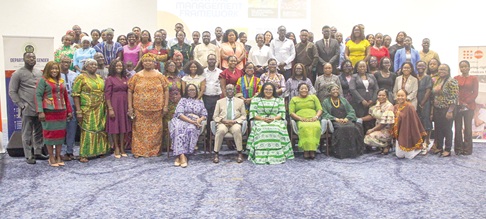
A national dialogue held in Accra yesterday (November 23) provided a platform for government institutions, development partners, civil society organisations, traditional authorities and representatives of Kayayei communities to contribute to the development of a framework that responds to the multifaceted challenges facing head porters.
In attendance were the MP for Salaga South and also the Vice-Chair of the Parliamentary Committee on Gender, Children, and Social Welfare, Zuwera Mohammed Ibrahimah, and Chief Director of the Ministry of Gender, Children and Social Protection, Dr Marian Kpakpah.
The Minister of Gender, Children and Social Protection, Dr Agnes Naa Momo Lartey, said the development of a National Kayayei Management Framework would provide a comprehensive approach to preventing unsafe migration, protecting vulnerable girls and women, facilitating rehabilitation and reintegration, and creating sustainable livelihood opportunities.
She expressed concern about the migration of girls, including children as young as 10, to cities such as Accra, Kumasi, Sekondi-Takoradi and Tamale to engage in head-portering.
Dr Lartey said the circumstances surrounding the migration of many of the girls exposed them to precarious living conditions and other vulnerabilities, requiring more coordinated and sustainable interventions.
“It is against this background that the Ministry, in collaboration with the Office of Her Excellency, Professor Naana Jane Opoku-Agyemang, Vice-President of the Republic of Ghana, and with the support of UNFPA, is facilitating the development of the National Kayayei Management Framework,” she said.
Dr Lartey explained that the framework would establish clear institutional responsibilities, coordination arrangements and accountability mechanisms to guide its effective implementation.
Broader inequalities
The UNFPA Country Representative, Dr Wilfred Ochang, said the Kayayei phenomenon reflected broader inequalities in infrastructure and access to economic and social opportunities, particularly between northern and southern Ghana.
Dr Ochang called for a broader understanding of the phenomenon beyond the economic activity of carrying loads in markets, arguing that the circumstances driving young women and girls into the trade must be addressed.
He outlined six priority areas for the proposed framework: prevention, protection, empowerment, integrated services, reintegration, and systems strengthening and data management, adding that the framework must place Kayayei at the centre of its development and implementation.
Sustainable solutions
Social Policy Advisor at the Office of the Vice-President, Dr Mariam Idrisu, who represented the Vice-President, called for a coordinated, rights-based and sustainable national response to address the challenges confronting Kayayei, with emphasis on economic empowerment, access to essential services and improved living conditions.
She said the proposed policy framework must move beyond short-term relief and charity to provide lasting solutions that protect the dignity, rights and welfare of young women engaged in head-portering across the country.
