
The Free Senior School (SHS) policy has delivered historic gains in access, equity and social mobility, but its implementation reveals systemic challenges, research has revealed.
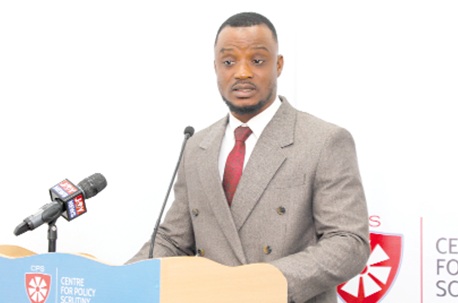
The Lead Researcher, Dr Jacob Oppong Nkansah, a lecturer at the University of Education, Winneba, said in Accra last Tuesday that the successes chalked up were unevenly distributed across school categories: elite schools focused on standards and governance, while disadvantaged schools struggled with survival needs.
The other researchers are Papa Kojo Botsio, PhD candidate at Oxford University, the Executive Director, Centre for Policy Scrutiny (CPS), Dr Adu Owusu Sarkodie, and the Head of Programmes, CPS, Stephanie Anokyewa Tawiah.
Research, split opinions
Using the qualitative research methodology (interviews), it captured how participants interpreted and made sense of the policy in their daily lives.
Speaking on the topic: "Improved access, quality question. A report on nine years of Ghana's Free Senior High School organised by the Centre for Policy Scrutiny, a political think tank, indicated divergent opinions on the rationale behind the policy.
There were split opinions between students, teachers and parents, with the majority seeing the policy as more political than a reform mechanism.
While categories A and B schools thrive with adequate resources, supported by old students and Parent Teacher Associations, other lower categories mainly struggle to survive.
Reforms needed
Despite these challenges, the research recommended that the policy be sustained with enhanced resources and improved implementation.
Consequently, the research proposed, among other measures, replacing blanket automatic promotion with a structured, performance-based system and reinstating repetition for students who perform poorly.
It also proposed tracking the teacher-pupil ratio and publishing WASSCE results at the district level.
The research further recommended Artificial Intelligence (AI) training for teachers in urban, peri-urban and rural communities.
It called on the government to diversify funding sources by establishing a dedicated fund for financing the Free SHS programme.
The research urged the government to depoliticise the policy and treat it as a national programme rather than one belonging to any particular political party.
Looking ahead, the research said policymakers faced a critical choice: consolidate the gains made so far or risk widening existing disparities.
Dr Nkansah said the reformed free SHS must move beyond enrolment expansion to equity-sensitive and quality-driven reforms.
"By addressing resource inequalities, strengthening accountability and investing in staff welfare.
"Ghana can transform Free SHS from a bold access policy into a sustainable model of inclusive excellence," he said.
The research concluded that indeed, the policy has come to stay and stands as one of the most consequential social interventions of the fourth republic, expanding enrolment by more than 27 per cent in its first year, narrowing the gender gap in secondary school, and delivering families across the country a long-denied experience of dignity and relief from cost.
