
Faith-based organisation leaders have been urged to actively use new Guidelines on Gender-based Violence (GBV), child marriage and adolescent sexual and reproductive health to promote safer communities and protect vulnerable groups.
The Director of the Chieftaincy and Religious Affairs Directorate of the Ministry of Local Government, Chieftaincy and Religious Affairs, Baafi Nsiah, said the guidelines were intended to provide faith leaders with practical guidance for addressing sensitive issues within their communities.
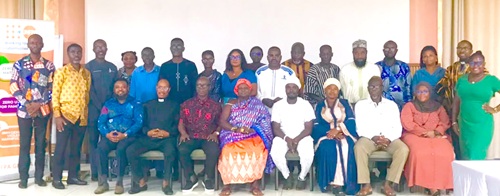
He said this in a speech read on his behalf at a validation meeting on the guidelines for engaging faith-based organisation leaders in Accra last Thursday.
Influential positions
He said faith leaders occupied a unique and influential position in society, as they shaped attitudes, influenced behaviour and provided guidance to individuals and families.
He said that influence could be harnessed to promote positive social norms, protect vulnerable persons and advance the wellbeing of children, adolescents, women and families.
“The true value of this document will not be measured by its publication but by its application and impact,” Mr Nsiah said.
He explained that the guidelines were expected to help faith leaders address issues such as GBV and child marriage with greater confidence and accuracy, while strengthening safeguarding measures and referrals to appropriate service providers.
Mr Nsiah said effective implementation would require the ownership and commitment of faith-based organisations, urging participants to endorse, promote and use the document within their respective faith communities and institutions.
He said consistent application of the guidelines could help raise awareness of adolescent sexual and reproductive health, prevent and respond appropriately to GBV, reduce harmful practices such as child marriage and strengthen collaboration among faith communities, government institutions and service providers.
Practical guide
A Gender Advocate, Bernice Sam, who facilitated the meeting, said the guidelines comprised nine chapters covering key areas necessary to equip faith leaders to respond appropriately to GBV.
She said the document included definitions of key concepts such as child marriage, forced marriage, GBV, safeguarding, exploitation, survivor-centred approaches, service providers and vulnerable adults.
Ms Sam said the guidelines also provided an overview of GBV, perspectives of different faith groups, relevant laws and policy frameworks, the roles and boundaries of faith-based organisations, prevention strategies, identification and response mechanisms, coordination, monitoring and review.
She explained that the guidelines were developed to provide common standards for faith-based organisations in their interactions with congregants and communities.
She said a survivor-centred approach required faith leaders and other actors to prioritise the safety, dignity, confidentiality and immediate needs of survivors.
“When somebody comes to you with a gender-based issue, it is that person’s interest that is paramount,” she said.
Ms Sam said faith leaders should also understand that GBV could occur in both private and public spaces and could take different forms, including physical, sexual, psychological and economic abuse, human trafficking, harmful practices and technology-facilitated violence.
She said addressing GBV required attention to the social norms and structures that enabled violence, rather than focusing only on immediate causes.
Ownership
The Deputy Director in charge of the Religious Affairs Unit of the ministry, Richard Obeng Boafo, said the guidelines had become necessary following engagements with chiefs and religious leaders on GBV, particularly child marriage.
He said although a similar manual existed for chiefs, there was no comparable document for faith-based organisations.
“The focus is not about just having the documents.Our focus is on having them use the documents to make an impact in society,” Mr Boafo said.
He said the guidelines would provide faith leaders with a uniform reference on the facts, causes and consequences of GBV, as well as appropriate referral points for people who needed support.
He expressed the hope that the validation process would strengthen ownership of the guidelines and help translate them into practical action within communities.
