
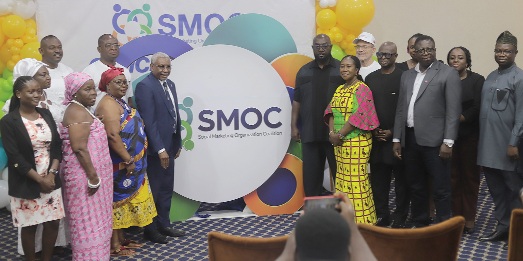
Ghana must encourage the use of contraception if it wants to achieve equitable women’s health, an Obstetrician Gynaecologist at the Korle Bu Teaching Hospital, Dr Ali Samba, has said.
He explained that contraception use was not just for preventing pregnancies but also for limiting the number of children one intended to give birth to and for spacing, which was very critical.
“Spacing is very important because it improves the outcome of the pregnancy itself and the survival of the child. Once you can space it, then outcomes are always better for mother and baby,” he explained.
Dr Samba, therefore, called on social marketing organisations to ensure that enough contraceptive commodities and products were available on the market for people to access them, adding that they should not limit their services to Accra alone.
He made the call at the launch of the Social Marketing Organisation Coalition (SMOC), whose members supply contraceptive products and commodities, as well as train health providers and support quality supervision in collaboration with Ghana Health Service (GHS).
SMOC brings together five social marketing organisations that have a shared commitment to make reproductive health products and services more affordable and available across the country.
They are AYA Collective, DPT International Ghana, Total Family Health Organisation, MSI Reproductive Choices Ghana, and Planned Parenthood Association of Ghana.
Complications
Dr Samba, renowned as an excellent surgeon, said over the years in his career, he had seen women arrive at the emergency rooms with complications from unsafe abortion and mothers whose bodies had not recovered from one pregnancy before the next one began.
He said these were preventable, adding that a reliable supply of good-quality, affordable contraceptives and a trained provider close to home could have made a difference among them.
He urged SMOC to explore measures that keep quality contraceptives affordable, including how taxes and duties affect their final price.
He said they should also ensure that the quality of contraceptive commodities on the market is not compromised, as counterfeit and substandard products put women’s lives at risk.
“To our regulators, the Food and Drug Authority, Pharmacy Council and their partners, we need your continued firmness against counterfeit products and your support for timely registration of new and better methods so that Ghanaian women benefit from the innovation.
To the National Health Insurance Authority, let us keep working together towards family planning being fully available to clients under the national health insurance scheme through public and private providers,” he said.
The Director, Procurement and Supply Chain at the Ministry of Health, Dr Edward Agyekum, urged SMOC to, among others, plan with a national picture, protect quality at every step and stay accountable.
He also urged them to bring data to the planning table and share what they learn to improve the whole system.
Coalition
The Executive Director of Total Family Health Organisation, Joseph Addo Yobo, said the coalition had been formed at a time donor resources were fast running, challenges that confronted the health system was mounting and getting more as well as competition for health resources had become very intense.
He said they believed that this was also the appropriate time for them as social marketing organisations to work together and complement one another on a unified platform that would collaborate with the MOH, the GHS and relevant stakeholders to address the challenges that remained to be tackled.
The Vice-President and Technical Lead of AYA Collective, Emmanuel Kuffour, said their vision was a Ghana where every woman, man or young person obtained quality and assured reproductive health products at a price that they could afford regardless of where they lived.
