
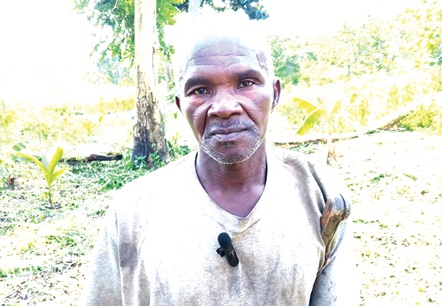
Dry spell lasting only a few weeks has severely affected farms across the Bono Region, threatening farmers’ investments, livelihoods and prospects for a good harvest.
The promise of a good harvest is fading fast for farmers in the Bono Region as the dry spell threatens to turn months of hard work and financial investment into devastating losses.
Maize, beans, vegetables, okro, cassava and cocoyam are among the crops struggling under the dry conditions, raising concerns about the region’s contribution to the country’s food supply.
Thousands of cedis invested in land preparation, seeds, fertiliser and labour are at risk, leaving farmers worried about how they will recover their costs if the crops fail.
In some fields, maize plants remain standing, their leaves reaching towards the sky, but the dry soil beneath them tells a different story.
For farmers who have invested heavily in their farms, the prospect of losing their crops after months of hard work and financial sacrifice is distressing.
Troubling picture
A visit by the Daily Graphic to farming communities in the Sunyani, Wenchi and Berekum municipalities, as well as the Banda and Jaman North districts, revealed the difficult conditions confronting farmers.
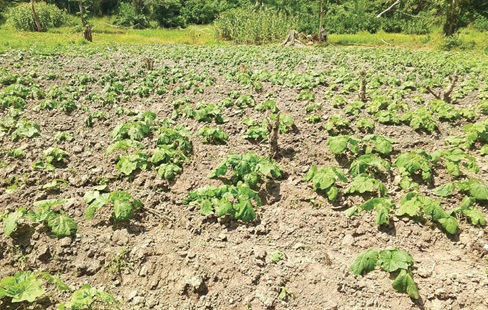
A struggling okro family in Berekum municipality
The fields presented a troubling picture of dry soil, scattered plant residue and crops at different stages of growth, many exposed to conditions that could undermine their development and eventual yields.
Although some crops remain green, their appearance offers little assurance of a successful harvest.
Cashew and some other cash crops appear to be faring comparatively better, while several food crops are showing signs of stress.
For women and young people who have committed their savings and labour to farming, potential crop losses threaten not only their incomes but also their hopes of supporting their families and achieving financial independence.
Investments at risk
Farming demands patience, sacrifice and considerable financial commitment. Farmers spend money on land preparation, seeds, fertiliser and labour long before they can expect returns.
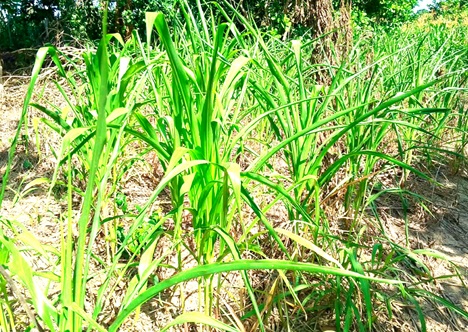
A maize farm affected by the dry spell.
However, when rainfall becomes inadequate, particularly in upland areas, farmers risk losing much of the investment they have made in their crops.
A 52-year-old maize farmer at Dorbor in the Banda District, Kwame Afriyie, told the Daily Graphic he had invested more than GH¢25,000 in cultivating six acres of maize.
He said the money covered land preparation, seeds, labour, fertiliser and other farming expenses.
Mr Afriyie had hoped that a successful harvest would enable him to recover his investment, support his family and save towards the next farming season.
“Every morning, I come to the farm hoping the situation will improve, but the soil is still dry. I have spent so much money on this farm, and I do not know how I will recover it if the maize fails,” he said.
His experience reflects the financial uncertainty confronting farmers who have limited means of protecting their crops from prolonged periods without rain.
Another farmer at Branam in the Wenchi Municipality, 38-year-old Felicia Gani, said she had invested GH¢5,600 in three acres of maize and cassava.
She hoped to sell part of her produce to pay her children’s school expenses, meet other household needs and finance the next farming season.
The dry conditions, however, had left her uncertain about whether the farm would generate enough income.
“I used the little money I had saved to start this farm because I wanted to earn something for myself and support my family. Seeing the crops struggle like this is painful.
If I lose the harvest, where will I get money to start again?” she said.
For farmers with limited financial reserves, crop losses could mean losing not only their savings but also an important source of future income.
Food security warning
The situation raises concerns about the vulnerability of food production to adverse weather conditions, according to the Bono Regional Manager of ActionAid Ghana, Kwame Afram Denkyira.
He said the region was an important contributor to the country’s agricultural production and that significant reductions in staple crop output could affect farming households, food traders, processors and consumers.
Maize is a major staple and an important ingredient in poultry feed, while cassava and cocoyam provide food and income for many households. Beans and vegetables also contribute to dietary diversity and nutrition.
Mr Denkyira said substantial crop losses could leave farming households facing a double burden: losing food they would ordinarily consume and the income they would earn from selling surplus produce.
Consumers could also face pressure if reduced supplies contributed to higher food prices, although the eventual impact would depend on the scale of production losses and wider market conditions.
For rural families whose livelihoods depend heavily on agriculture, a poor harvest could deepen financial hardship and make it more difficult to meet basic needs.
Irrigation gap
The lack of adequate irrigation systems leaves many farmers vulnerable because they depend heavily on rainfall to establish and sustain their crops.
When the rains become inadequate, they have limited means of supplying the water needed to protect their investments.
The situation highlights the risks associated with rain-fed agriculture, particularly for smallholder farmers who lack the resources to develop alternative water sources.
Investment in small-scale irrigation, rainwater harvesting and water-storage facilities could help reduce that vulnerability.
Efficient watering technologies, mulching, soil-moisture conservation and drought-tolerant crop varieties could also help farmers manage dry spells.
Irrigation schemes
The Banda District Director of Agriculture, Angel-Mmafiik Ayarick, said expanding access to small-scale irrigation was critical to reducing farmers’ dependence on rainfall and protecting their investments against prolonged dry spells.
She urged the government to establish irrigation schemes in farming communities, provide appropriate farm machinery and equip agricultural departments with the logistics needed to respond effectively to drought and other farming challenges.
Mrs Ayarick also called for solar-powered agro-processing facilities to reduce post-harvest losses, improve food availability and strengthen sustainable agricultural production.
The Chief Executive Officer of the Global Media Foundation (GloMeF), Raphael Godlove Ahenu, said infrastructure should be accompanied by affordable access to water, technical advice and maintenance arrangements to ensure that facilities remain functional.
He called on the Ministry of Food and Agriculture and the affected assemblies to assess the extent of the crop damage, identify communities most at risk and determine
what practical support could still help save threatened crops.
Mr Ahenu said timely agricultural advice, reliable weather information and access to affordable inputs and financing would also help farmers respond to the situation and recover from potential losses.
Climate resilience, SDGs
The situation raises broader questions about the country's preparedness for weather-related risks to agriculture.
Although climate change is increasing agricultural risks in many parts of the world, determining whether it caused or intensified the current dry spell in the region requires scientific assessment and meteorological evidence.
What is evident from the field observations is that farmers are facing dry conditions with limited means of protecting their crops.
Reliable weather forecasts, early-warning systems and sustained investment in climate-resilient agriculture are therefore important in helping farmers prepare for and respond to changing conditions.
Information alone, however, will not protect farmers who lack access to irrigation, finance or appropriate technology.
The situation also has implications for the United Nations Sustainable Development Goals (SDGs), particularly Goal 1 on ending poverty, Goal 2 on achieving zero hunger and Goal 13 on climate action.
Protecting crops and supporting farmers are therefore not only agricultural priorities but also essential to safeguarding livelihoods, improving nutrition and strengthening resilience to environmental shocks.
Protecting the next harvest
Young Agriculturalist Ebenezer Owusu Adu, who is involved in vegetable production, said authorities needed to assess crop damage and provide targeted assistance where feasible.
In the longer term, he urged the government to invest in irrigation, improve water management and promote climate-resilient farming practices to reduce farmers’ dependence on rainfall.
Without such assistance, he warned, some farmers could be forced to borrow, reduce the areas they cultivate or temporarily abandon farming.
Mr Adu said the consequences would extend beyond individual farms because traders, transport operators, processors and retailers also depended on reliable agricultural production for their livelihoods and businesses.
Conclusion
For farmers watching their crops struggle, the immediate concern is how to prevent further losses and recover from the financial strain.
The government must urgently assess the damage, support affected farmers, invest and expand access to irrigation to protect livelihoods and safeguard food security.
Writer’s email:
