
Pests and diseases were a persistent, burdensome issue that drained farmers’ spirits and resources.
This was a widespread problem in the mid-19th century and intensified significantly in the 20th century due to the Industrial Revolution and globalisation.
Now it seems that farmers have to battle pests, diseases, and climate change.
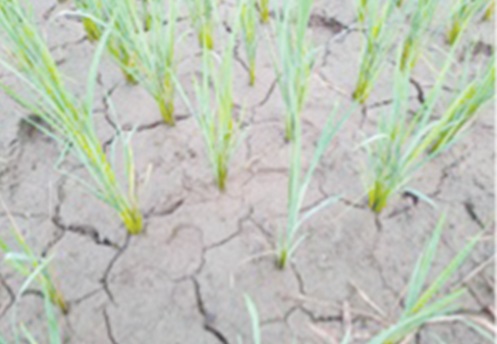
This has led to a significant reduction in yields and to huge losses for farmers and the world economy in general. Severe drought and excessive rainfall, two key components of climate change, have caused significant harm to farmers, farmland and various habitats.
Climate Change Effects
The drastic change in rainfall patterns has been evident since the late 1960s and early 1970s.
This has contributed greatly to the large share of flooding on farmland resulting from changes in weather patterns.
The uneven rainfall pattern over these subsequent years has caused significant yield losses and ultimately economic losses.
According to Danso (2025), drastic changes in Ghana’s weather patterns have affected the productivity of staple crops such as maize, cassava, yam and millet.
This is because rains do not come when they are expected; sometimes there is heavy rainfall that causes severe flooding and at other times, no rainfall at all.
World action
In September 2015, the United Nations established a set of 17 goals (Sustainable Development Goals, SDGs), adopted by all member states as part of the 2030 Agenda for Sustainable Development. Goal 2 addresses “zero hunger”, so by 2030 no person should go hungry.
However, given the rate at which farmland is affected by severe drought and excessive rainfall, immediate action is needed to mitigate the effects of climate change on crop production.
More specifically, Goal 13 focuses on “climate action”, emphasising steps to combat climate change by reducing greenhouse gas emissions. Countries with lower emissions or significant reductions in emissions receive financial rewards called “Carbon Credits”.
Instrument
A carbon credit is a tradable instrument (typically a virtual certificate) that conveys a claim to avoided Greenhouse Gas (GHG) emissions or to the enhanced removal of GHGs from the atmosphere.
Credits allow such claims to be transferred from an entity that generated the avoided emissions or enhanced removals to a buyer.
The buyer of a carbon credit can then “retire” it to count avoided emissions or enhanced removals towards a climate change mitigation goal or as a contribution to global mitigation efforts.
Obtaining carbon credits involves developing a project that reduces or removes greenhouse gases through forestry, renewable energy, or agriculture, ensuring it meets "additionality" (beyond business-as-usual), and having it verified by a third-party standard such as Verra (VCS) or Gold Standard. One credit typically equals one metric ton of CO2 avoided or removed.
Pollutant
Carbon dioxide (CO2) is the most abundant GHG produced by human activities and the most important pollutant to address to limit dangerous climate change.
Other important greenhouse gases include methane, nitrous oxide, hydrofluorocarbons (HFCs), perfluorocarbons (PFCs), nitrogen trifluoride (NF3), and sulfur hexafluoride (SF6).
Fully addressing climate change will require reducing emissions of all GHGs. Scientists and policymakers have established “global warming potentials” (GWPs) to express the heat-trapping effects of all GHGs in terms of CO2-equivalents (denoted “CO2”).
It has been estimated that a country needs hundreds of billions to over a trillion annually for climate action, but some of the countries involved in the UN are developing countries, leaving them with barely enough to spend on climate action.
This has led to uneven rainfall and unpredictable patterns of atmospheric change.
Farmers are facing problems, especially drought and floods caused by climate change.
This has led to a loss of yield and a sharp increase in the prices of farm foods, making them very expensive to purchase.
Conclusion
As it stands now, every effort must be made to ensure that the climate situation does not escalate, so that posterity will meet a world with the right temperature and rainfall for agricultural productivity.
Governments, communities, farmers and individuals must take action such as planting more trees, reducing atmospheric pollutants and reducing overall environmental degradation to help preserve the earth we live in.
The writer is a second-year student of the Faculty of Agriculture, KNUST.
Email:
