
The Citizens’ Platform on Constitutional Reform (CPCR) has backed the creation of an independent Political Parties Regulatory Commission to regulate political parties and campaigns.
Such a commission, it said, must be established and protected under the Constitution rather than left to ordinary legislation.
It said the CPCR also supported allowing every party member in good standing to vote in the election of party executives and the selection of parliamentary and presidential candidates; and regulating campaign periods, expenditure, financial disclosure and the abuse of incumbency.
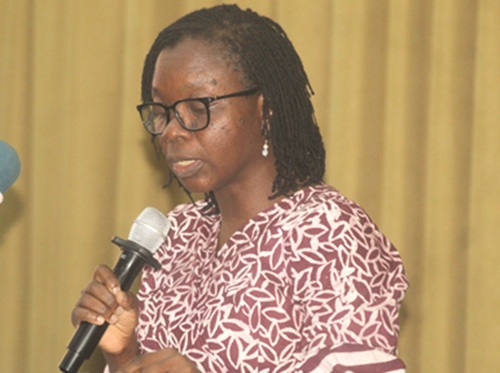
The Chairperson of the CPCR Steering Committee, Prof. Akosua Keseboa Darkwah, stated this at a press conference in Accra last Tuesday to state present the CPCR position paper on the constitutional review process and the government’s position paper on the Kwasi Prempeh Constitution Review Committee.
The CPCR is a collaborative initiative facilitated by CDD-Ghana, STAR-Ghana Foundation and the Democracy Hub, bringing together diverse organisations, activists and citizens to coordinate engagement, advocacy and accountability in Ghana’s ongoing constitutional reform process.
Elections
She said the CPCR also supported the idea of moving the presidential election to the first week of November, so as to extend the transition period from one month to two.
She stressed the need to confirm the holding of presidential and parliamentary elections to be held on the same day in the Constitution.
Prof. Darkwah said the CPCR also supported the proposal to reduce to 14 days the period for filing a presidential election petition, requiring the Supreme Court to determine it within 30 days and requiring the Electoral Commission to promptly disclose all relevant election data.
She reiterated the need to place clear limits on what the President and government could do between election day and the swearing-in of the next President, “including preventing last-minute appointments, unbudgeted contracts or wage increases, dealings in public lands or assets and bills introduced under certificates of urgency, and making any action taken in breach of those limits void.”
She said it was important to place binding constitutional safeguards on the use of certificates of urgency, so that they are limited to genuine emergencies, supported by publicly available reasons and subject to cross-party approval, adequate parliamentary scrutiny and public consultation.
The CPCR, she said, agreed with the proposal to allow a Ghanaian citizen by birth to serve in Parliament without being disqualified simply because that person also holds the citizenship of another country.
Prof. Darkwah called for an expansion of the functions of the National Commission for Civic Education to include organising national presidential debates and convening civic forums and town hall meetings, under independent and impartial rules and with adequate, protected funding.
She further called for the establishment of an Independent Public Emoluments Commission with a clear constitutional mandate to determine pay and benefits across the public sector, including those of the President and Article 71 officeholders, so that officeholders no longer effectively determine their own remuneration.
She said there was also the need to pass a comprehensive and enforceable Human Rights Act before or at the same time as the constitutional amendments, ensuring that it carried the full range of rights proposed and does not delay, narrow or weaken any right Ghanaians already enjoy.
