
The Deputy Minister for the Interior, Ebenezer Okletey Terlabi, has said correctional services should be understood not merely as a system of punishment, but as an investment in public safety, human development, and social stability.
He stressed that the work of the prison system extended far beyond confinement to encompass crime prevention, family stability, youth development and community safety.
He described corrections as "an important national investment in human capital, social stability, and public safety."
Speaking at the 2026 Prisons Month last Monday (November 16), he emphasised that the vision for reform rests on people, partnership and progress.
This, he explained, includes supporting prison officers, respecting the dignity of people in custody, recognising victims and families, and involving the government, the judiciary, the private sector, civil society, and communities.
Transformation
Mr Terlabi said rehabilitation was a practical route to safer communities. He added that "the transformation of the Ghana Prison Service must begin with the people who deliver its mandate," and called for broader access to education, skills certification, counselling, and mentorship, linked to livelihood opportunities after release.
He also highlighted prison agriculture and industries as ways to build skills and productivity, urging investment in equipment, market access, and partnerships.
These partnerships, he said, "must move beyond occasional donations and ceremonial goodwill" and focus on clear needs, measurable outcomes, and lasting benefits.
Mr Terlabi called for coordinated, accountable reform such as improving staff welfare and institutional capacity, easing pressure on prisons through more effective justice processes, and supporting reintegration, describing rehabilitation as "a practical contribution to national security and social stability."
Rehabilitation
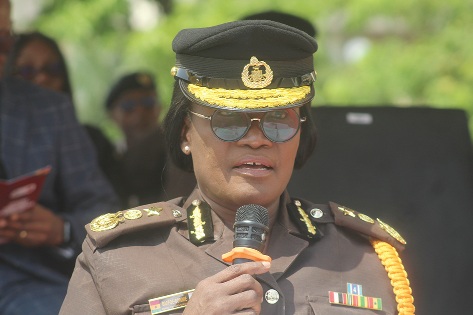
The Director-General of the Ghana Prisons Service, Patience Baffoe-Bonnie, said the Service's Think Prisons 360 Degrees agenda was a holistic reform effort spanning crime prevention, prison management, and reintegration.
She added that the aim was to transform prisons from "purely custodial institutions into modern, productive, self-sustaining, and development-oriented correctional systems."
She acknowledged longstanding challenges, including overcrowding, ageing infrastructure, inadequate vehicles, and limited resources. Ms Baffoe-Bonnie emphasised a rehabilitative approach, stating, "imprisonment must be a pathway to rehabilitation, not retribution."
She described new directorates and plans to implement the Parole Act and Community Service Act, offering supervised community-based alternatives for eligible persons.
She also highlighted officer welfare and development through training facilities, education partnerships, and a virtual psychosocial clinic.
The Director-General outlined efforts to improve infrastructure, health care, vocational training, and prison agriculture, while noting that further support was needed.
The intended outcome, she said, was for "every inmate to leave our facilities not as an outcast, but as a skilled citizen," and for officers to work in a safe, conducive environment.
Prisons Month Activities
The Commandant of the Prison Officers Training School in Roman Ridge, Deputy Director of Prisons, Isaac Abuaku-Ameyaw, said activities for the Prisons Month included open days at prison establishments, an agricultural fair and exhibition, community partnerships, and forums on policy and institutional reform, culminating in a national showcase.
He called on the public to support the work and said success would be measured by "the reforms we advance, and the lives we transform," not simply by the events held.
