
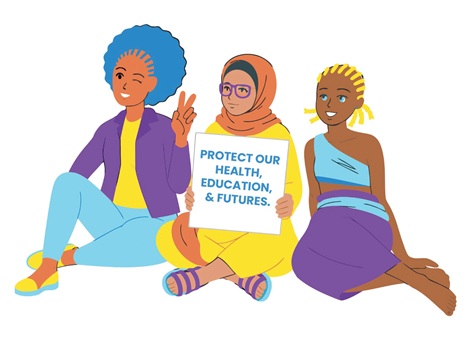
Climate disasters such as floods, droughts, cyclones and extreme heat are driving up the risk of child marriage, teenage pregnancy and violence against girls, a new global study by Plan International has found.
The research combines three decades of health and climate data from 52 low- and middle-income countries with a survey of 5,000 girls and young women aged 15 to 24 in Bangladesh, Kenya, Peru, Senegal and Zimbabwe. It also draws on interviews and focus groups with 139 girls in those countries.
Researchers found that climate shocks destroy the health and education services girls depend on at the very moment they need them most, with those who already have the least bearing the heaviest burden.
One in 10 girls said they had personally experienced an unintended pregnancy following a climate-related event, while 33 per cent reported a rise in unintended pregnancies in their communities.
Another one in 10 said they had married before 18, and 36 per cent said more girls in their communities were being married or entering unions before that age after disasters.
A statement issued by Plan International Ghana said the study also revealed that more than a quarter of the girls, that is 28 per cent, said violence against women and girls had increased after climate-related events.
Nine in 10 said such events were putting serious pressure on their families' survival, health and stability.
It said access to health care also suffered, with some 76 per cent of girls saying more girls and young women in their communities struggled to access at least one health service, rising to 84 per cent among those affected by drought. Almost half (49 per cent) noticed more pregnancy and childbirth complications, including miscarriages, after a climate shock.
Girls from minority communities were twice as likely to struggle to access services, nearly three times as likely to report an unintended pregnancy, and more than twice as likely to face pressure to marry young.
Education
At the centre of these harms is education.
The study said girls whose schooling was disrupted were twice as likely to marry young or face an unintended pregnancy, and uninterrupted education emerged as the most consistent protective factor against early marriage and violence.
Prolonged drought was the hazard most consistently linked to rising child marriage.
Families lose harvests, livestock and income over months and years until marrying off a daughter becomes a survival strategy. Because slow-onset drought rarely triggers an emergency response, the damage goes largely unseen, the report says.
"My father has no livestock to sell and take me to college; that's how I accepted to be married off," said Galgalo, a 22-year-old participant from Kenya. Shahina, 19, from Bangladesh, said destitute families facing flooding "marry off girls at a very young age."
The study said girls also reported being pressured into exchanging sex for money or basic necessities, and faced harassment and sexual violence in cramped, dark emergency shelters.
Plan International Chief Executive, Reena Ghelani, said only half of national climate plans mentioned girls' or women's health, and just 0.5 per cent of multilateral climate finance supports health.
With El Niño expected to be among the most powerful in decades, the organisation warned the window to act was narrowing.
Ahead of COP31, it urged governments and donors to keep schools open and free during climate shocks, set aside a share of adaptation finance for adolescent girls' health, include menstrual products, contraception and protection services in every emergency response, and reach the most marginalised girls.
"What is missing is not the evidence, but the urgency to act on it," Ms Ghelani said.
