
The Regional Advisory Information and Network Systems (RAINS), a non-governmental organisation in the Northern Region, has called on the government to adopt a climate change education manual for schools.
The organisation said equipping young people with climate knowledge could help influence environmental behaviour in their households and communities.
The organisation also urged the government to review the use of inorganic fertilisers and other chemical farm inputs to promote sustainable agriculture.
It said integrating climate change education into the school curriculum, alongside efforts to encourage environmentally friendly farming practices, was essential to protecting soil fertility and helping communities respond to the effects of climate change.
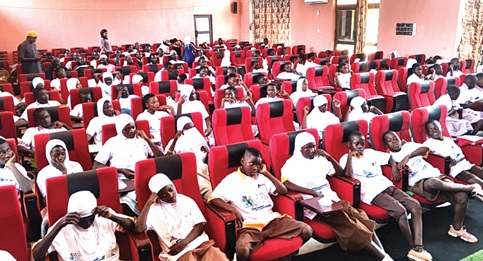
The Project Coordinator of RAINS, Alhassan Abubakar, made the call at the second edition of the Schools' Climate Festival in Savelugu, held on the theme: “Climate Champions: Inspiring Change in Our Schools and Communities.”
The festival brought together pupils, teachers, school authorities, development partners, representatives of the municipal assembly and agricultural officers to promote climate awareness and environmental protection.
Mr Abubakar said RAINS had developed a climate change manual to help pupils understand environmental challenges and adopt sustainable practices at school, at home and in their communities.
The organisation had piloted the manual in selected schools in the Savelugu Municipality in collaboration with the Savelugu Municipal Education Directorate. Under the programme, climate ambassadors and designated teachers held weekly sessions to educate pupils on climate change and practical ways to protect the environment.
The manual is intended for integration into subjects such as General Science and other environment-related disciplines. However, Mr Abubakar said limited resources and difficulties in securing government adoption had constrained efforts to extend the initiative to more schools.
“If the government is able to adopt this manual and scale it up to the regional or even national level, learners will become more aware of climate change and take conscious steps to practise environmentally friendly activities in their schools and homes,” he said.
The programme has encouraged pupils in several communities to move beyond classroom discussions and take practical action on environmental challenges.
Mr Abubakar cited pupils from Pigu, Nyologo, Ligba and Yong, among other communities, who had planted trees using seedlings supplied by RAINS to improve their school environments and protect the land.
Other schools had introduced weekly clean-up exercises to keep their surroundings clean and suitable for teaching and learning.
Mr Abubakar also expressed concern about the use of inorganic fertilisers and chemical pesticides, advocating greater attention to indigenous farming methods and environmentally friendly alternatives.
He said engagements with farmer groups had highlighted policy-related challenges, including the availability of chemical farm inputs on the market, which, in his view, undermined efforts to promote sustainable agriculture.
He urged the government and other stakeholders to encourage farmers to reduce their dependence on synthetic inputs and adopt practices that maintain soil fertility.
Compost and biochar, he said, could improve soil health, support beneficial soil organisms and help the soil retain moisture.
He also recommended weeding as an alternative to indiscriminate chemical spraying for controlling weeds.
Sustainable farming
The Municipal Director of Agriculture for Savelugu, Alhaji Baba Musah, also urged farmers to adopt sustainable agricultural practices to protect the environment, improve crop yields and reduce the effects of climate change on food production.
He said agriculture depended heavily on environmental conditions and warned that practices that degraded the soil could undermine the ability of future generations to produce enough food.
Festival winners
Nine basic schools in the municipality participated in this year's festival. They were Bunglun, Libga, Yong, Nyologo, Yemo and Ying Basic Schools, Savelugu Girls Model School, Pong Tamale Experimental Basic School and Malja Al-Ansuare Junior High School.
Savelugu Girls Model School won the debate competition, Malja Al-Ansuare JHS took the role-play category, while Pong Tamale Experimental Basic School won the exhibition category.
