
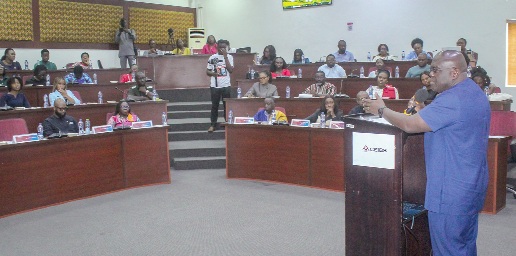
The Chief of Staff, Dr Julius Debrah, has urged public servants to improve service delivery, simplify administrative procedures and treat people with dignity at their respective workplaces.
Dr Debrah, who was speaking at a Citizen Experience Workshop in Accra yesterday, added that the primary purpose of public service was to improve the lives of citizens.
The event brought together public servants, lecturers, students and officials of public institutions who discussed practical ways of improving citizens' experiences when dealing with government agencies.
The workshop followed the launch of a book Dr Debrah co-authored with Professor Robert Ebo Hinson, titled: 'Citizen Experience: A Reset for Superior Public and Civil Service Delivery'.
The Vice-President, Professor Naana Jane Opoku-Agyeman, launched the book in July this year.
The workshop was, therefore, intended to translate the ideas in the book into practical measures that public institutions could adopt to improve the quality and accessibility of their services.
Service
Dr Debrah said citizens must not endure unnecessary delays, repeated visits and frustrating administrative procedures to access services they were entitled to.
He outlined three areas for improving service delivery: making citizens' needs a priority in institutional plans, restructuring processes to eliminate unnecessary steps, and empowering frontline workers with the training and resources to address routine challenges.
Dr Debrah also urged institutional heads to examine their services from the perspective of citizens, identify processes that caused delays and work with other agencies to reduce the number of visits required to complete transactions.
Citizens’ rights
The Vice-Chairman of the Public Services Commission, Dr Irene Stella Agyenim Boateng, said public servants must recognise that the resources they managed belonged to citizens and that they were only custodians of those assets.
"Public servants should take time to explain procedures and decisions to citizens rather than expect them to comply with directives they do not fully understand," she said.
Dr Boateng also called for greater transparency in decision-making, clear communication and equal treatment of citizens irrespective of their social connections.
She said institutions must understand citizens' needs before developing policies and services for them.
Sanctions
In an interview, Prof. Hinson called for a combination of incentives and sanctions to improve performance.
He said institutional leaders must also demonstrate standards they expect their employees to uphold.
"We need to encourage them.
We need to make them do better.
But at the core, leaders must also walk their talk," Prof. Hinson added.
Prof. Hinson, who is at the Department of Marketing and Entrepreneurship at the University of Ghana Business School, further said that the mindset of some public servants who treated service delivery as a favour to citizens rather than an obligation was one of the challenges confronting public institutions.
As a co-author, Prof. Hinson said the book drew examples from Ghana, Rwanda, Kenya and Nigeria, and examined issues such as artificial intelligence, diversity, inclusion and the development of a more resilient public and civil service.
