
The Board of Challenging Heights, a child-centred non-governmental organisation, has approved a wide-ranging package of governance reforms, in what the anti-trafficking organisation is calling the most significant overhaul of its governance structures in its two-decade history.
At the heart of the changes is a constitutional review that redraws the lines between governance and management.
The organisations Advisory Board has been reconstituted as the Board of Directors, while the senior management body, previously known as the Management Board, is now the Management Committee. The organisation’s top executive role, formerly styled President, has been renamed Executive Director.
A statement released by Challenging Heights said the changes were designed to make it clear that the board held supervisory and fiduciary authority over the organisation, while the Management Committee was accountable to it for day-to-day operations — a separation increasingly expected by funders and regulators of founder-led nonprofits.
The newly reconstituted Board of Directors is chaired by Professor Mavis Amo-Mensah. Its other members are Dr Lawrencia Aggrey-Bluwey, who has been appointed acting Treasurer; Kenneth Mammudu; Linda Ataa Osabutey; and James Kofi Annan, who serves as Executive Director and Secretary to the Board.
Safeguarding
On safeguarding, the board adopted a strengthened policy framework reaffirming that the protection of children and young people in the organisation’s care underpinned every aspect of its work.
The board approved a comprehensive data protection framework governing how personal information was collected, classified, stored, used and disclosed, with heightened safeguards for the records of trafficking survivors.
That framework, it said, was anchored in Ghana’s Data Protection Act, 2012 (Act 843), and introduces a tiered classification system placing the most sensitive beneficiary records under the highest level of restriction.
Also, an independent evaluation of Challenging Heights’ programmes had been institutionalised to look at systems and institutional development spanning 2016 to 2026.
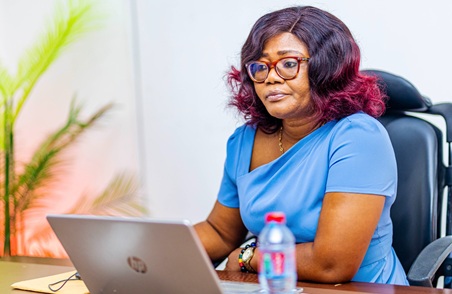
“These reforms are about durability,” said Professor Amo-Mensah, Chair of the Board of Directors.
“Challenging Heights has done twenty years of difficult and important work, and the board’s responsibility is to ensure that the institution is stronger than any individual within it.”
She added that clear supervisory authority, credible succession planning, rigorous safeguarding and data protection, and an independent evaluation whose conclusions the organisation did not control, was what allowed an institution to outlast its founders.
James Kofi Annan, Executive Director, said “I have led this organisation from its beginning, and the most useful thing I can do now is to make it less dependent on me.
Commissioning an evaluation whose findings I cannot edit, and submitting to a board with clear authority over the executive, are not concessions.
They are how we prove that what we say about children’s protection is matched by how we run ourselves.”
