
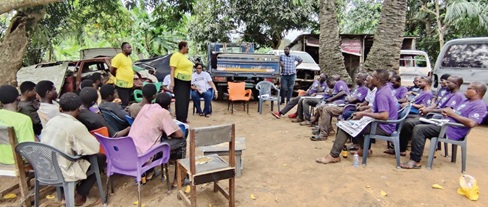
Care for Society Network International (CfSNI) has trained male champions from four districts in the Eastern Region to promote safer and more inclusive workplaces for women in male-dominated trades.
The training brought together participants from Fanteakwa South, Abuakwa North, New Juaben North and New Juaben South as part of a four-day training and radio advocacy initiative under the SafeTrade Eastern project, implemented in partnership with WUSC through the EMPLOY project.
The Executive Director of CfSNI, Anita Ampofoa Amoako-Gyimah, said the initiative was aimed at training more than 800 male allies and reaching over 60,000 people through radio discussions.
She said men had an important role to play in addressing harassment, discrimination and other barriers confronting women in male-dominated occupations.
“Creating safer workplaces for women cannot be left to women alone. Men must recognise their responsibility and become active partners in challenging harmful attitudes and behaviours,” she said.
Addressing gender stereotypes
Participants in the workshop discussed factors that exposed women in male-dominated occupations to stereotyping, harassment and other uncomfortable situations.
The discussions focused on societal expectations of jobs suitable for men and women, unequal power relations and the normalisation of harmful behaviour.
The training covered gender stereotypes, sexual and gender-based violence, sexual harassment, consent, personal boundaries and abuse of power.
It also highlighted how silence and victim-blaming could discourage victims from reporting incidents.
Promoting male allyship
Sessions on male allyship focused on practical ways participants could contribute to safer working environments, including challenging degrading remarks, responding safely when witnessing harassment, listening to concerns without blame and supporting women's equal access to training and employment opportunities.
Participants were also introduced to measures outlined in the SafeTrade Safeguarding Toolkit, including workplace codes of conduct, confidential and anonymous reporting mechanisms, referral pathways and the responsibilities of safeguarding focal persons.
Miss Amoako-Gyimah said the training was expected to equip the participants with the knowledge and skills to influence positive behavioural change in their workplaces and communities.
“Male champions must not only understand these issues but also speak up, challenge harmful practices and help create environments where women can learn and work without fear,” she said.
The engagement also provided a platform for participants from the four districts to share experiences and discuss their responsibilities as trainers, supervisors and community advocates.
The team subsequently extended the advocacy through radio discussions to engage employers, apprentices, parents and community leaders on the need for safer and more respectful workplaces.
The initiative seeks to strengthen workplace accountability and community support for women pursuing skills training and careers in male-dominated trades.
