
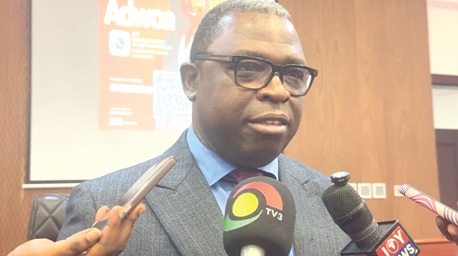
The Legal Aid Commission is to pilot a programme at selected markets and lorry stations to bring legal services closer to traders, commercial drivers and other vulnerable persons who maybe struggling to access justice.
The programme, which forms part of this year’s Legal Aid Week, would enable citizens to consult lawyers and seek assistance to resolve disputes without having to leave their workplaces.
The Executive Director of the Commission, Edmund Amarkwei Foley, who announced this at the launch of the 2026 Legal Aid Week in Accra yesterday, on the theme: “Justice at your doorstep”, said the initiative would become a regular feature of the commission’s operations.
The programme would include visit to Kasoa and Kaneshie markets, and hopefully, the Tema Station. Similar activities would be undertaken in other regions where the commission has its offices.
“Traditionally, access to justice will mean that you make your services available, but the people come to you. We have realised that it is difficult sometimes for people to get to us, so we are going out to them,” he said.
Staff shortage
Mr Foley said the commission had about 185 staff, including approximately 45 lawyers who were serving a population of more than 30 million people.
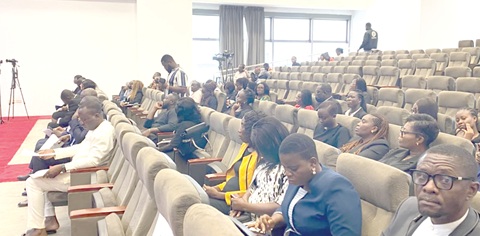
Some of the participants in the event
He said the shortage of lawyers, particularly in underserved areas, limited the commission’s ability to extend its services to more people.
The Board Chairperson of the Commission, Justice Samuel Adibu Asiedu, a Justice of the Supreme Court, said the Commission had offices in only 10 out of the 16 regions, and 25 out of the 261 districts in the country.
Citing a Ghana Statistical Service multidimensional poverty report, Justice Asiedu said 7.3 million people, representing about 20 per cent of the population, were multidimensionally poor, with 43.8 per cent of them experiencing severe poverty.
He said the figures highlighted the need to expand legal aid services, particularly for people whose economic circumstances made it difficult to pursue legal claims.
Justice Asiedu appealed to the Ministry of Finance to expedite action on financial clearance for the recruitment of additional staff, while urging the Attorney-General to facilitate the laying of the commission’s draft regulations before Parliament to provide a framework for training, certifying and deployment of legal aid delivery officers.
Resources
The Member of Parliament for Kwesimintsim, Philip Fifii Buckman, said the parliamentary committee responsible for constitutional and legal affairs would work with the Attorney-General to push for the needed resources to strengthen the commission’s mandate.
He said poor remuneration and inadequate allowances were discouraging lawyers from joining the commission, and that the committee would explore measures to make the commission more attractive to lawyers, including considering arrangements that could allow them to undertake private practice.
“Come what may, we shall reset the Legal Aid Commission,” Mr Buckman assured.
Accessibility
In a speech read on behalf of the Attorney-General and Minister for Justice, Dr Dominic Akuritinga Ayine, by the Solicitor-General, Mrs Helen Zeru, he said legal aid was essential in ensuring that poverty did not prevent people from exercising their constitutional rights.
“Legal aid is, therefore, not charity. It is an essential component of a fair and accessible justice system, ensuring that poverty does not become a barrier to justice,” he said.
The Attorney-General mentioned six areas requiring attention to improve access to justice.
They are - expanding legal aid services to districts, providing timely legal assistance to eligible persons following arrest, mobilising the legal profession to support pro bono services, strengthening alternative dispute resolution, using technology to improve access and ensuring sustainable funding and accountability.
