
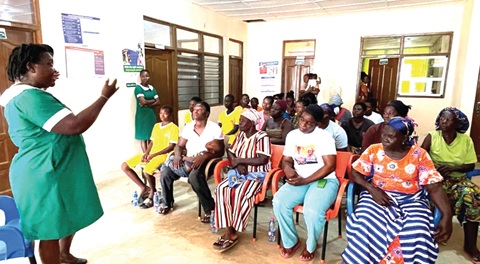
For some women in Digaare and Buing, two communities resettled by Cardinal Namdini Mining Limited (CNML) in the Talensi District of the Upper East Region, access to breast cancer screening had remained out of reach for years.
Although many had heard about the disease, they had never undergone screening and had limited knowledge of its warning signs, risk factors and the importance of early detection.
That situation is, however, beginning to change following a breast cancer awareness initiative by CNML, operators of one of West Africa’s largest single-stream gold mines, which provided women in the two communities with free screening services and education on breast health.
The exercise combined education with screening to encourage women to pay greater attention to their breast health, while those requiring further medical attention were referred to appropriate health facilities.
Ninety-nine women, 59 from Digaare and 40 from Buing, participated in the exercise that sought to raise awareness about the importance of breast self-examination, regular screening and seeking early medical attention.
Two women were referred to the Upper East Regional Hospital for further medical assessment after health professionals identified concerns requiring additional investigation.
For the participants, the initiative offered an opportunity not only to undergo screening but also to acquire knowledge to help them recognise possible warning signs and make informed decisions about their health.
Experience
One of the beneficiaries, Janet Nkulba, 34, described the exercise as an eye-opener that had changed her understanding of breast cancer and the need to prioritise her health.
“This is my first time participating in breast cancer screening, and many of my colleagues are also experiencing it for the first time.
“It has made me aware of the dangers breast cancer poses to our health and what we can do to prevent it. I am very grateful for that,” she said.
Another beneficiary, Diana Sobil, 29, said she had never undergone breast screening and described the initiative as an important opportunity to learn how to protect her health.
She said the sensitisation had improved her understanding of the signs and symptoms, risk factors and preventive measures associated with breast cancer.
“This sensitisation has improved my understanding of the signs and symptoms, risk factors and preventive measures associated with breast cancer.
Going forward, I will desist from some practices I did not know could expose me to breast cancer,” she said.
She urged other women to take their health seriously and make use of available screening services, stressing that breast cancer should not be taken for granted.
Baba Phillippa, 33, said the exercise had increased her awareness of breast health and the importance of regular examinations.
She said the knowledge acquired had encouraged her to pay closer attention to changes in her breasts and share the information with other women in her community.
Healthy communities
The Superintendent in charge of Local Content and Grievance Management at CNML, Godwin Bade-Daamir, said the initiative formed part of the company's commitment to promoting the health and well-being of communities affected by its operations.
A nurse at the Accra New Site Community-based Health Planning and Services (CHPS) compound in Digaare, Matilda Ayinpoka Anyenera, said reporting late at health facilities remained a major challenge in breast cancer management.
She explained that delays in seeking medical attention could lead to complications, making treatment more difficult and, in some cases, resulting in breast removal or death.
She urged women to watch out for unusual changes in their breasts and seek medical assessment promptly rather than wait for symptoms to worsen.
She emphasised that early detection and timely medical intervention could improve treatment outcomes and encouraged women to make regular breast examinations and screening part of their healthcare routine.
