
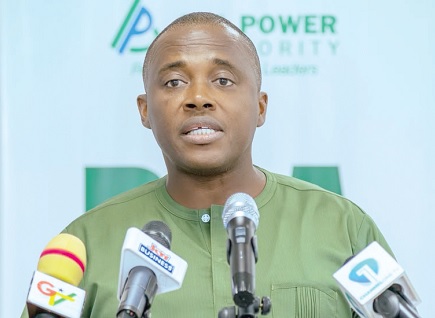
The Bui Power Authority (BPA) will add about 100 megawatt-peak (MWp) of solar photovoltaic (PV) capacity to increase operationalised solar PV capacity to about 205MWp this year.
It will also develop 300MWp of dispatchable solar PV plants through the integration of large-scale Battery Energy Storage Systems (BESS) by the end of 2028.
The Chief Executive Officer (CEO) of the authority, Kow Eduakwa Sam, told a stakeholders meeting in Accra last Friday during a review of the authority's performance for last year that guided by its vision, mission and core values, BPA remained committed to innovation, operational efficiency and financial sustainability.
Under the year under review, BPA made a significant increase of its renewable energy capacity from 55MWp to 105MWp.
The increase brings its installed capacity to 404MW of hydro and 105MWp of solar.
The CEO said the authority recorded a revenue of $145.9 million from generation, while net profits for the year amounted to $66.2 million.
He told the stakeholders, which included players in the energy sector, chiefs, banks and insurance companies that the authority also maintained a strong asset base, and recorded gradual improvement on most of its efficiency indicators.
"The authority saw improvement in some of its prevailing challenges, particularly the sector-wide receivables challenges with key customers, and will continue working to strengthen financial sustainability and deliver long-term value," Mr Sam said.
Assurance
In spite of the achievement, the CEO gave the assurance that the safety of its employees, contractors and host communities remained a top priority.
"Throughout the year, the authority maintained a strong safety culture aimed at preventing accidents and incidents.
"As a result of these efforts, the authority recorded zero lost-time injuries in 2025," he said.
Mr Sam reported that power generation and supply followed prevailing hydrological conditions and system dispatch requirements.
"Total energy generation from all sources reached 1,438 gigawatt-hour GWh, which was 6.5 per cent above the projected generation of 1,350GWh and 6.7 per cent higher than the 1,348GWh recorded in the previous year," he said.
He added that the main dam recorded an average 95 per cent availability, and peak loads of 363MW, 3.6MW and 101.7MW for the main dam, turbinette and solar PV plants respectively.
Year performance
The year commenced with Bui Reservoir Surface Level at 178.76 meters above sea level (masl) and closed at 176.50masl, with a minimum of 166.22masl and a peak of 178.27masl.
On solar operations and development, the CEO said the authority made significant progress in its renewable energy expansion drive.
He stated that "50MWp of the ongoing 100MWp solar PV project was commissioned, bringing the operational land-based solar plant capacity to 100MWp”.
"Together with the 5MWp floating solar facility, the total installed solar capacity is 105MWp.
"Additionally, BPA commissioned a 28MWh battery energy storage system to enhance grid stability and support integration of renewable power into the national grid," he added.
Mr Sam said the battery energy storage system capacity would continue to be expanded as required to support supply stability of the solar installations.
"The operation of the solar PV plants continued to complement hydropower generation.
The total output of the solar installations was 102GWh compared to 76GWh in 2024," he added.
He announced that in line with the authority's medium term development plan, processes were underway to develop solar PV projects with capacities ranging from 50MWp to 250MWp with battery storage power plants in strategic locations across the northern part of the country.
On hydro, he said the Bui Hydro plant continued to operate reliably and in line with planned system demands.
The total output from the plant was 1,339GWh for the year, marking a five per cent increase over the previous year.
Minister
The Minister of Energy and Green Transition, John Adbulai Jinapor, urged the authority to increase its revenue collection to enhance the operations of the authority and make it financially reliable.
He charged the authority to deploy more battery-backed renewable energy for the future.
