
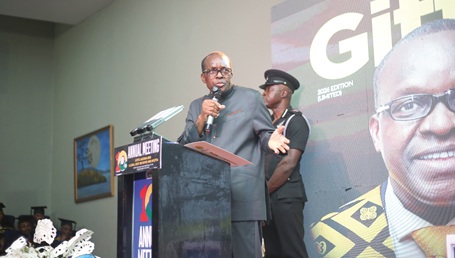
The Speaker of Parliament, Alban Sumana Kingsford Bagbin, has called on African countries to speak with one voice in demanding a fairer global financial system to address the continent’s growing debt challenges.
He said Ghana and other African countries must move beyond fragmented national efforts and build a coordinated continental position, supported by a global framework that brought together creditors, multilateral institutions, private lenders and development partners.
Mr Bagbin made the call at the 10th Ghana International Trade and Finance Conference (GITFiC) annual conference on the Third Global Debt Initiative and the Second AfCFTA Tertiary Students’ Congress in Accra.
It was on the theme: “Sealing GITFiC global debt initiative: Transforming sovereign debt challenges into a catalyst for sustainable development and global economic broad-based prosperity.”
Fair system
Mr Bagbin said: “Africa is not seeking hand-outs from the international community but a fair system that would allow the continent to participate meaningfully in global economic decision-making. The Global South is just asking for nothing but a fair system.” He, therefore, stressed the need for reparative justice and economic sovereignty.
The Speaker, however, emphasised that African countries must first build domestic consensus and strengthen continental cooperation before engaging global partners.
Governance
The Speaker urged African leaders to examine their governance systems and public-sector structures, adding that the continent must take greater responsibility for its development outcomes.
Using Singapore and Rwanda as examples, he said countries could make significant progress by adopting governance approaches suited to their circumstances.
The Speaker wondered why Ghana, despite its early development advantages, had fallen behind some countries, insisting that historical factors alone could not explain the situation.
“We must look within ourselves,” he said, and called for reforms to improve public-sector efficiency and accountability.
Mr Bagbin further called for a review of public-sector conditions of service and expenditure, warning that excessive administrative costs and benefits could place unsustainable pressure on national finances.
He said governments must reconsider spending arrangements that created inequalities within institutions and committed public resources beyond what revenues could support.
The Speaker urged stronger collaboration among Parliament, academia, the diplomatic community, financial institutions, the private sector and development partners to find practical solutions to the debt crisis.
Situation
The UN Resident Coordinator in Ghana, Zia Choudhury, said debt relief must form part of broader efforts to address historical injustices and inequalities.
He said rising debt payments squeezed funds for schools, clinics, roads and other vital services, adding that Ghana’s return to macroeconomic stability must translate into decent jobs, stronger local businesses and better public services for ordinary citizens.
Mr Choudhury said that debt relief alone was not a development strategy and, therefore, called for transparent public finance management to ensure that savings from lower debt payments were invested in national priorities.
He reaffirmed the UN’s commitment to working with GITFiC and other partners to advance fairer debt solutions and sustainable development.
Commitment
The Chief Executive Officer of GITFiC, Selasi Koffi Ackon, reaffirmed the organisation’s commitment to advancing Ghana and Africa’s participation in international trade and sustainable development as it marks its 10th anniversary.
He highlighted GITFIC’s efforts to promote AfCFTA through educational programmes, student initiatives and professional training in partnership with the University of Ghana, and congratulated the first cohort of graduates.
Mr Ackon also emphasised the need to support small and medium-sized enterprises and address Africa’s debt sustainability and development financing challenges through responsible debt management and international cooperation.
